Armenian studies in exile: A conversation with Veronika Zabel Nayir
In an academic landscape where Armenian studies remains underfunded and underrepresented in Canada, Veronika Zabel Nayir is part of a small but determined group of emerging scholars working to change that. With a background in European philosophy and political theory, Nayir’s intellectual journey has led her to explore the boundaries of memory, justice, and catastrophe, most recently through the lens of Armenian literature and testimony.
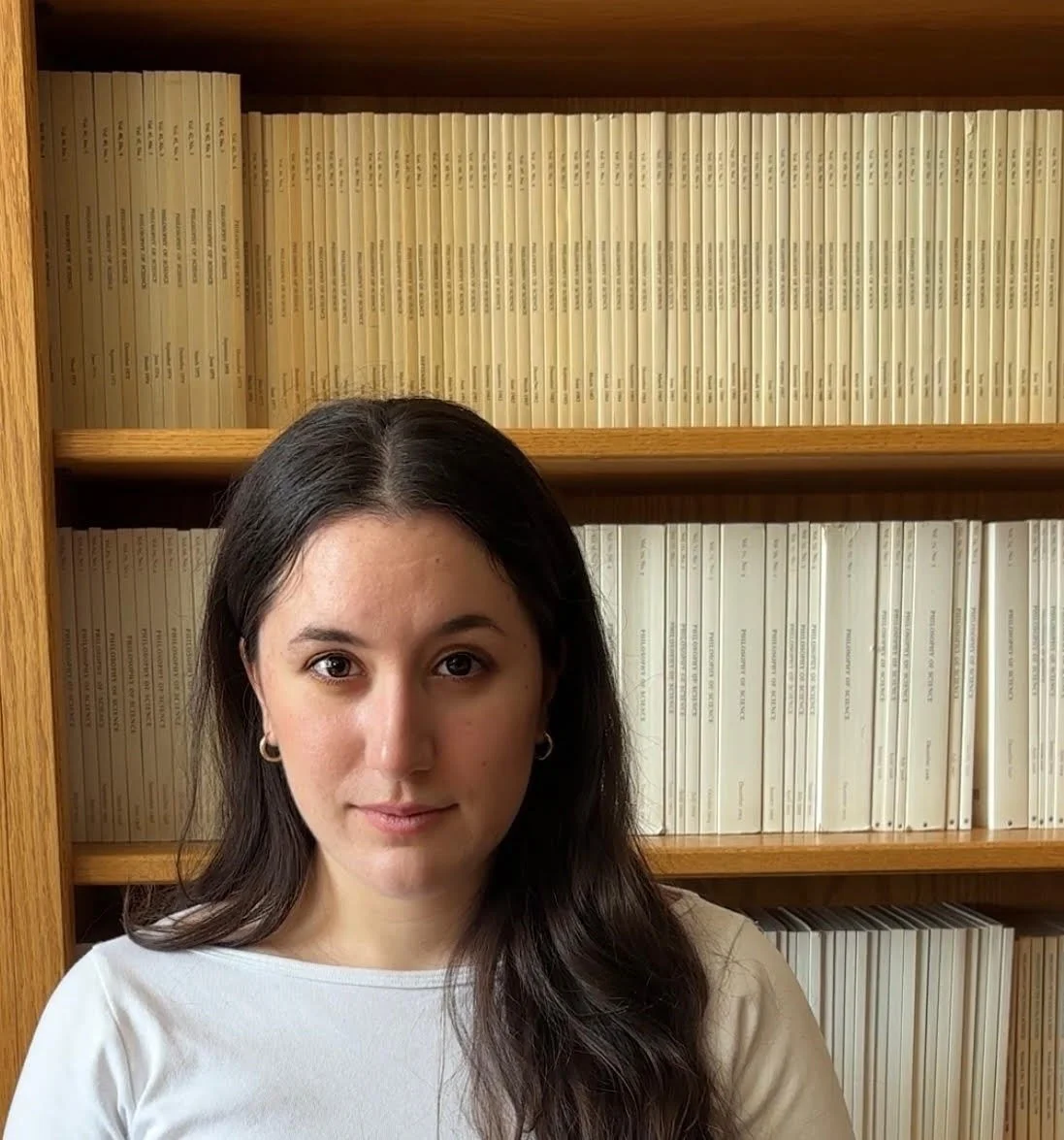
Veronika Zabel Nayir
A recent graduate of the University of Toronto and York University, Nayir has presented her work at the UCLA Graduate Armenian Studies Conference and contributed to broader conversations about the future of the field. Her research focuses on the writings of Zabel Yesayan, the limits of comprehending genocide, and the philosophical demands posed by unspeakable historical violence.
In this interview with Torontohye, Nayir discusses the state of Armenian studies in Canada, her experience at UCLA, and the challenges of balancing academic inquiry with professional goals. As she prepares to begin law school, Nayir reflects on the importance of intellectual community, transnational networks, and the evolving role of Armenians in the humanities.
Rupen Janbazian: Your background is in European philosophy and political theory. What led you to Armenian studies, and how has this shift influenced your research interests?
Veronika Zabel Nayir: My interest as an undergraduate student some years ago began very broad in scope—I began at the University of Toronto interested in ancient philosophy, especially Plato, and then swiftly pivoted to modern political thought, especially canonical French and German thinkers like Rousseau and Hegel. These were thinkers who were conceptualizing, among other things, what kind of a thing the state was, what its origins and aims were.
My trajectory was very much historical, in a way. I realized as I waded deeper that many of the French and German thinkers of the twentieth century were preoccupied with philosophical questions that the Holocaust had almost demanded them to repose and rearticulate: questions about justice, ethics, responsibility and complicity, reparations, identity, community, the nature of memory, the predicament of the witness-survivor. Whether it was apparent or not, it became clear that the social conditions of this century had infected and informed what theorists believed were the pressing questions of their time.
I do really think that the history of political and social theory in the twentieth century can be read as a series of successive attempts to furnish a response to the spectre of genocidal catastrophe. I became very interested in drawing out this discourse and the boundaries of this discourse, and it immediately led me to Armenian studies and to a theoretical exploration of the event of the Armenian Genocide and the array of literature it produced. I first read Marc Nichanian’s landmark text The Historiographic Perversion and I knew this was the kind of work I wanted to do in a Master’s and Ph.D. program.
At the same time, I was becoming interested in the history of women’s rights and feminist philosophy, which led me to Zabel Yesayan. Around this time last year, I read Dr. Elyse Semerdjian’s text Remnants: Embodied Archives of the Armenian Genocide, which I read as being a feminist intervention. And I was increasingly interested in decolonial philosophies–meditations on liberation from important figures in the history of thought like W.E.B. Du Bois to Aimé Césaire. Again, these were people who were very much trained in the Western European tradition, and began to think about ‘their own people.’
Janbazian: You studied at both the University of Toronto and York University. How would you assess the offerings in Armenian language and studies at these institutions, and how do they compare to programs elsewhere, such as UCLA?
Nayir: The University of Toronto does not, as far as I’m aware, offer any Armenian language courses. There is a course in the Near and Middle Eastern Studies Department on Christian communities—Armenians, Syriacs, Copts, Maronites. I am not even sure that it is offered every year. I suspect that there might be a ‘special topics’ course offered at the graduate level every few years.
Now, that departmental situation doesn’t necessarily prohibit a graduate student interested in Armenian studies from working on those themes, but it makes it difficult: one has to take it upon themselves to read the canonical texts, create comprehensive reading lists, take on the burden of deep language study (or at least reach out to those who can help them), and create their own networks of mentorship. It can be very demanding. There is less I can say about York, besides the fact that there exists a wider trend of under-funding and defunding humanities programs.
The UCLA offerings in Armenian language and culture are robust and extend into social and intellectual history. It is really enviable. At the UCLA conference, I met Professor Hagop Gulludjian, who is in charge of Western Armenian. Eastern Armenian is taught, as is Classical Armenian—elementary to advanced! There are period-specific courses, too—one on the Cilician period, one on the Bagratid Dynasty.
There is no such thing in Toronto. But again, I am coming from a theory background, not an Armenian studies background. I did have an education on what being a comparatist is; I had an education in translation theory, social and political thought. I remind myself that Yesayan herself was educated in Paris and had familiarity with European literature and philosophy. Do I wish I had easier access to the mammoths of Armenian studies, intellectual centres like UCLA and the University of Michigan? Yes. But we live in a digital age, so I’ve been blessed to be able to forge connections that way, to request texts digitally, and so on.
Janbazian: What was it like presenting at the UCLA Graduate Armenian Studies Conference? How did this experience shape your understanding of the field and its academic networks?
Nayir: I was really proud to be there, to convene with other young people. Present were students and scholars from Georgia, Italy, Lebanon. Professor Peter Cowe, who is the chair of Armenian at UCLA, was extremely generous to us. Members of the Los Angeles Armenian community were present, as were undergraduate students.
The topics of presentation were as heterogeneous as print culture and knowledge production in Lebanon, Nakhijevan and forced migration, the reception of the story of David of Sassoun in Soviet Armenia, ethnographic fieldwork on seasonal work migration in Armenia, Arousyak Papazian and theatre, and an architectural presentation on the Zoravar chapel, to name just a few.
Janbazian: You were one of only a few Canadian participants at the conference. How important is it for Canadian scholars to engage in international Armenian studies forums?
Nayir: When I was selected to present at the UCLA conference, I knew I would be one of at most a couple of Canadian students present. And this is because there are not many of us here pursuing Armenian scholarship at the graduate level.
I should note that I was supported financially by the National Association for Armenian Studies and Research (NAASR), as well as the Calouste Gulbenkian Foundation—the first, an American organization, the second based in Portugal. So, as far as who is funding my travel, I am a bit of an internationalist.
In a past edition of Torontohye, Dr. Victoria Rowe (who worked on Armenian literature at U of T) notes the situation, even in her time, of Canadian academic institutions as it related to Armenian studies. Specifically, she notes the necessity of competing for few academic jobs in the U.S. This is absolutely still the case. So the importance of forging connections with U.S. institutions, organizations, and mentors becomes even more urgent.
Janbazian: Your presentation focused on Yesayan. What key themes did you explore in your paper, and why do you find her work particularly relevant today?
Nayir: The panel my presentation was a part of was entitled “Women’s Agency in the Late Ottoman Period.” I’m particularly interested in the position of Zabel Yesayan as a woman witness to catastrophe—she was the only woman on the list of intellectuals drawn up by Ottoman authorities to be targeted for arrest and execution in 1915—as well as the status of her writing as both a literary text and a work of testimony.
The French-Armenian philosopher Marc Nichanian writes about her in the context of the resurrection of the name Aghed, a name that she had given to the genocidal will in her text In the Ruins, about the catastrophe in 1909 Adana. (Of course, there were many names given to describe genocidal violence: yeghern [pogrom], aksor [exile], chart [massacre, carnage], darakrutiun [deportation], all predating Lemkin’s coining of the term “genocide” in 1944.)
Nichanian, like me, was educated in European philosophical thought (which takes the Holocaust as its primary catastrophic event), bringing that conceptual machinery to bear on the Armenian Genocide and the writing it produced. His wager is that the name Aghed should go untranslated, and that the refusal to translate into another language or into a legal quantifier does some kind of justice to the experience of genocide. Yesayan herself writes at every turn of the ‘indefinable,’ ‘infinite,’ ‘boundless’ catastrophe before her.
My project seeks to understand the double demand to, on one hand, think genocide and, at the same time, announce or insist that it is fundamentally ‘unthinkable.’ I said earlier that I believe the vast majority of twentieth-century European philosophy to be a series of attempts to understand the Holocaust—an event that, according to its survivors, imposes some kind of limit or prohibition on thinking. (Its reality is unthinkable, unspeakable, beyond language or representation.)
To explore this theme, I engage the writings of the Armenian Genocide. As David Kazanjian and Marc Nichanian write in their dialogue Beyond Genocide and Catastrophe, “To respect such an Event would be [...] to respect the limits it imposes on comprehension” (130). My presentation goes on to think about the burden of proof, registers of remembrance, and the motif of senselessness across post-genocide literature.
Ultimately, part of my belief is that engaging the Armenian literary canon in more dominant idioms, such as political theory or philosophy, allows Armenian studies to be more expansive—we do not have to remain stuck in a discourse about proof or social scientific fact. We can thereby deparochialize the Armenian Genocide—we can use its literature to talk about genocide in general, to talk about testimony in general.
I understand my experience as being a kind of study of how I can integrate Armenian literary history into existing philosophical conversations about experience, trauma, and reason.
Janbazian: What do you see as the most significant strengths and challenges facing Armenian studies in Canada today? Are there structural or institutional changes that would help strengthen the field?
Nayir: The challenge can be put very simply: we do not have enough course offerings at the university level, if at all. Again, we have, at most, two at the University of Toronto. Of course, everyone says they are keen to see Armenian language and studies taught at the undergraduate and graduate level, but I am not even sure that there is significant demand. Of course, I hope there would be.
In UCLA history, the establishment of their robust Armenian studies program within the Near Eastern Center was an endeavor that required the creation of an endowed chair, a concerted effort to hire faculty, sustained community engagement, and the development of a wide course catalogue.
I do also want to dispel some reactions I have had from people who inquire about what exactly ‘Armenian studies’ is. Armenian studies is the name given to a vast landscape of studies that study some ‘Armenian’ thing. The field, vast as it is, should be treated with the same rigour as any other discipline is treated with. It imposes the same demands as German or French studies.
Again, the field is heterogeneous and encompasses such areas as human geography, genocide studies, sociology, law, women’s studies, archaeology and architecture, linguistics and philology, religion and church history, the Persian empire, the Ottoman empire, Soviet and post-Soviet history, not to mention the history of various Armenian kingdoms and political entities, the diaspora, transnational studies—huge worlds unto themselves.
Janbazian: In our exchange, you mentioned discussing the potential for endowed chairs in Armenian studies with scholars at the conference. What would such an initiative mean for Canadian universities, and do you see a realistic path toward making it happen?
Nayir: Establishing a chair in Armenian studies in either Toronto institution would be, of course, a financial commitment. I imagine the community would need to fundraise toward the hiring of faculty. I have no knowledge of whether this has been attempted or proposed in the history of the Toronto-Armenian community. And again, there would have to be some level of certainty regarding enrollment—that is to say, crudely, demand.
Janbazian: Looking ahead, how do you see your role in Armenian studies evolving? Are there particular projects, collaborations, or areas of research you hope to pursue in the coming years?
Nayir: I will formally be leaving academia for the time being. I did complete my first year as a PhD student, and officially earned my Master’s degree. In August, I begin law school at Osgoode Hall. The funny thing is that when I mention this to particularly older people, they are much more keen to hear about law, much more impressed. Being a lawyer has a kind of funny authority that being an academician or professor doesn’t seem to have.
Which brings me to my next concern: we would like for there to be more Armenians doing humanities scholarship, but I think they can be dissuaded from pursuing such a path. It is a difficult path. But the same goes for many fields.
My experience as a Master’s student, as a PhD student, as someone who was subjected to oral examinations and produced a thesis, someone who has travelled to present at conferences and has published, is a deep sense of gratitude for the international Armenian organizations who supported me. It was really an astounding realization that I could initiate my own intellectual networks and be rewarded for the dedication, interest, and initiative I took on.
Armenian studies was in fact this expansive intellectual network that I could take some part in as a young scholar—that is to say, the situation of Armenian studies in Canada is not representative of the state of Armenian studies globally. The experience of “being in” academia will absolutely colour my journey in law. I bring with me to law skills in close reading, a historical sensitivity, a deeper understanding of my heritage, and the intellectual tradition I can claim as my own.
I should note that the Armenian writers I preoccupied myself with did not confine themselves to the academy. Zabel Yesayan, among so many other things, wrote a letter on behalf of Ottoman Armenians to the Armenian Delegation at the Paris Peace Conferences of 1919. I think to be an Armenian in the humanities and social sciences is to be in a unique and privileged position. As a law student, I hope to continue to support Armenian projects and find my own way into and within Armenian organizations—organizations like the Armenian Bar Association.
Janbazian: Thank you again for taking the time to share your insights and experiences with Torontohye. It’s been a real pleasure.
Nayir: Thank you again for the opportunity. I’m grateful to contribute to the growing conversation around Armenian studies in Toronto and to build on the thread Sophia Alexanian began with her thoughtful piece on Victoria Rowe. It feels meaningful to be part of that unfolding dialogue. ֎
***
This conversation was published in Torontohye's June 2025 (#214) issue.