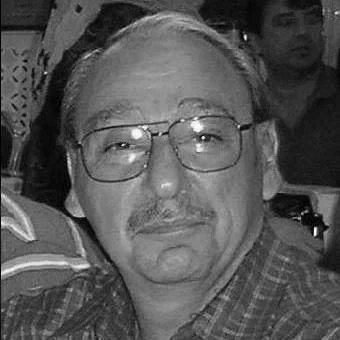
From Hamilton’s Armenian village to academia: Isabel Kaprielian-Churchill’s journey
“My childhood was both Armenian and Canadian. I grew up with a dual heritage, and I have always been proud of and loyal to both,” reflects Isabel Kaprielian-Churchill, a distinguished Canadian scholar and the child of Armenian Genocide survivors, who has spent her career exploring the complexities of Armenian immigration and diaspora culture. Her deep connection to her heritage has fueled her research, resulting in significant contributions to the understanding of the Armenian experience in Canada. In this interview, Kaprielian-Churchill reflects on her upbringing in Hamilton's Armenian community, her academic journey, and the personal and professional motivations behind her extensive work on Armenian history and cultural preservation.
Throughout the conversation, she shares insights into her early life, the influence of her father's storytelling, and her commitment to documenting the Armenian diaspora's rich history. Kaprielian-Churchill's passion for preserving Armenian identity and her dedication to educating future generations shine through, offering a glimpse into the life of a scholar who has profoundly impacted both her community and the broader field of diaspora studies.
***
Hrad Poladian: Tell us about your childhood and family origins.
Isabel Kaprielian-Churchill: I was very fortunate to grow up in the “Armenian village” in Hamilton. Most Armenians in the city lived around Gibson and Princess Streets in Hamilton’s north end. While the area wasn’t exclusively Armenian, we Armenians dominated it. The neighbourhood’s focal point was our “club,” what we would now call a community centre.
The community centre was crucial for us. It consisted of a large rented room where the men played cards and backgammon and where meetings were held for the Armenian Revolutionary Federation (ARF), the Armenian Relief Society (ARS), and the Armenian Youth Federation (AYF). The space also hosted community events like the April 24 commemorations, May 28 Armenian Independence Day celebrations, Easter and Christmas festivities, and other gatherings like plays and concerts.
Next to the large room was a much smaller space that served as our Armenian supplementary school. We attended Armenian school three evenings a week to learn to read and write our mother tongue. A small kitchen in the rear allowed the guardian of the “club” to prepare Armenian coffee for his male clients. A small confectionary in the big room also provided soft drinks, ice cream, liquorice, and chocolate bars for anyone interested.
Poladian: How did growing up in this Armenian neighbourhood shape your childhood experience?
Kaprielian-Churchill: We children felt safe and secure in the neighbourhood. It had a special warmth, where all the women were our “aunties” and we children were all “cousins.” The older children looked out for the younger ones. Saying we played is an understatement—we played constantly. There were few cars at the time, so the streets were ours. We played hide and seek, kick the can, kick the stick, relief-o, British bulldog, London Bridge, leapfrog, and blind man’s bluff. We played war, cowboys and Indians, and “house,” wearing our mother’s old high heels and pushing our “buggies” with our dolls bundled inside. We roller-skated, skipped rope, and played agates (marbles) and ball games. Often, on summer evenings, we would gather on someone’s veranda and stretch our imaginations by telling spooky and scary stories. The spookier, the more thrilling!
On Saturdays, our group headed for the Playhouse Theatre to watch a double movie feature, The News of the World, and cartoons—all for six cents! On Sunday afternoons, we joined Sunday School at St. Philip’s Anglican Church in our area.
Poladian: What was the significance of these activities and the neighbourhood for your sense of identity?
Kaprielian: Churchill: While these activities were enjoyable, the crucial issue was that they helped us bond with each other. We children were all Armenians. We played together, trusted one another, and cared for each other. Through these many facets of child and youth culture and by our camaraderie, we entrenched our Armenian identity.
All the Armenian children attended Gibson Street Public School. It was a little Europe. The children’s families were from all parts of Europe. In addition to us Armenians, we had Hungarians, Ukrainians, Poles, Dutch, Czechs, Jews, Russians, and Germans. We also had a good number of British children: English, Scots, and Irish, though most of the Irish, like the Italians, attended St. Ann’s Roman Catholic School, located in the same general area.
Poladian: Did you ever feel different or out of place at school because of your Armenian heritage?
Kaprielian-Churchill: I never felt that the teachers at Gibson looked down on us “foreigners.” Nor did Gibson interfere with our Armenian school. I presume Gibson treated the Ukrainian and Polish part-time schools in the same way. Our Christmas pageants reflected our multicultural society. The Irish danced their jigs; the Poles and Ukrainians, in their brightly coloured dresses and flowing ribbons, performed their cultural dances; a Ukrainian boy played traditional music on his piano accordion; a Czech boy sang songs in his home language; and a Hungarian boy played some gypsy music on his violin. When I was in kindergarten, this little Armenian girl was selected to be Miss Canada! We all participated in this vibrant display of ethnic culture. From an early age, we learned to appreciate Canada’s ethnocultural society.
Every morning, we pledged allegiance to the Union Jack, sang our national anthem, “God Save the King,” and said the Lord’s Prayer. We learned children’s hymns like “Jesus Loves Me” and “God Sees the Little Sparrow Fall.” Like the society we grew up in, our school was multicultural and had a British and Christian foundation. And yet we were Armenian. We spoke Armenian, learned Armenian history and cultural traditions, ate Armenian food, and felt Armenian.
You can see that my childhood was both Armenian and Canadian. I grew up with a dual heritage and have always been proud of and loyal to both.
Poladian: You’ve written extensively on Armenian history and immigration issues in Canada. You’ve authored articles such as “Armenians in Ontario” in Polyphony’s Fall/Winter 1982 issue and the book "Like Our Mountains: A History of Armenians in Canada," among others. What motivated you to pursue this work?
Kaprielian-Churchill: I was blessed that my father was a spellbinding storyteller. He told me stories about life in his native village of Cherman in the Keghi region of the Erzerum province. He shared stories of Armenian heroes and of Armenian resistance to oppression. He recounted his journey to Canada in 1912—just missing sailing on the Titanic—and his early years in the new country. I loved hearing these stories. As a youngster, I devoured history books. My favourite was a series called Britain and Her Neighbours. As I grew older, I branched into American and Canadian history books. I was fascinated by Lincoln and the Emancipation Proclamation. I pestered the local librarians with requests for books about the coureurs de bois and the French explorers, whose exploits fired my imagination.
In my teens, I promised myself that someday I would write the history of Armenians in Hamilton and asked my parents to keep any documents pertaining to Armenians. Luckily, they did. As I continued my education at the University of Toronto, I was fortunate to meet Professor Robert F. Harney, an ethnic historian. That meeting changed my life altogether. With his mentorship and supervision, I pursued immigration and ethnic studies, which eventually led to Like Our Mountains, published by McGill-Queen’s University Press in 2005. The book won the 2006 Clio Award for the best book on Ontario history, awarded by the Canadian Historical Association.
Poladian: Could you tell me about some of your other books and your latest work?
Kaprielian-Churchill: Sometimes, we come across interesting research material quite unexpectedly. One day, some years ago, I was working at the Stanford University Archives and came across the name of Dr. Ruth Aznive Parmelee (1885-1973). Aznive? Immediately, I was drawn to this woman. After some research, I found that she was the daughter of American missionaries in the Ottoman Empire and had worked as an American-educated medical missionary in Kharpert, where she trained Armenian girls in nursing. I was quite excited about Dr. Parmelee, but I didn’t have much information about her work or the girls she trained. Then, at a dinner party in Fresno, I was telling the guests about Dr. Parmelee and Armenian nurses when one of the guests mentioned that his mother had studied nursing in Kharpert and had her diploma. I was at his house the next morning, bright and early, and he loaned me her diploma to copy. That was the beginning of my book about Armenian nurses, Sisters of Mercy and Survival: Armenian Nurses, 1900-1930.
My latest book is about the Georgetown Boys, titled "The Georgetown Boys and Girls: Genocide, Orphans, and Canadian Humanitarianism."
Poladian: Are your children involved in Armenian issues?
Kaprielian-Churchill: Yes, they are. All three of my children have visited Armenia with their spouses, and they continue to take a deep interest in developments in Armenia, Artsakh, and Canada’s role in Armenian affairs.
Poladian: What message do you have for the Armenian youth of Canada?
Kaprielian-Churchill: I would encourage them to bring their spouses into the Armenian community and send their children to our Armenian school—the A.R.S. Armenian Private School. Non-Armenian spouses must appreciate more than just our delicious cuisine and understand more than just our tragic genocide. Even if they do not speak Armenian, they need to feel that they are part of a community—our community. They need to enjoy the warmth, support, and affection of our community members.
Poladian: You, Professor Lorne Shirinian, and Mrs. Sona Zeitlian have been great mentors and supporters as I began writing my book about the Georgetown Boys. I am forever grateful to the three of you. Thank you for this invaluable interview, Professor Kaprielian-Churchill, and good luck in your future endeavours. ֎
This interview was published in our Sept. 2024 issue
(Isabel Kaprielian-Churchill’s portrait by Hagop Janbazian, 2019)