A Toronto specialist’s mission to bring hearing to Armenia
By Edmond Ayvazyan
As a hearing care professional in Toronto, I’ve always taken pride in being the first Armenian in our city to serve the Armenian community’s hearing care needs. It’s been incredibly rewarding to help our elders hear better, but I’ve often wondered how our people in Armenia were managing hearing loss. Over the years, my interest in serving those further afield grew. I became curious about participating in a hearing aid mission—where volunteers travel to underserved areas, donate their time and resources, and help fit hearing aids for those in need. I promised myself that if I ever had the opportunity to volunteer in Armenia, I would make it happen.
That opportunity finally came this year.
In late August, I received word from the Armenia Hearing Aid Project, led by Heidi and Armen Kavoukjian and their family in Los Angeles, that they would be hosting another mission in Armenia at the end of September. I immediately reached out to express my interest in participating, and to my delight, they welcomed me on
board. The next day, I booked my flights.
Day 1
After a long day of travel, I arrived in Yerevan and settled in for a few days before the mission began. On the morning of the 24th, I arrived at Arabkir Hospital at 8 a.m., where I was warmly greeted by the Audiology and Otolaryngology team. What a fantastic group of professionals! Alongside them were volunteers from the local medical school, and together, they’ve been serving the people of Armenia since 2017.
Soon after, I met Heidi and her family. They were incredibly kind and welcoming, and Heidi expressed her gratitude for my help. She even told me I was now part of her extended family, which truly captured the spirit of Armenian hospitality. The day was dedicated to setup: Laptops were reconfigured, networks were established, hearing aids were tested and charged, and we met the volunteers and staff who would work with us. Several stations were set up where patients would move through different stages of the process—intake forms, consultations with ear, nose, and throat specialists, ear fittings, and finally receiving their hearing aids.
It became clear that the project is well-supported by the Arabkir Hospital, and after the five-day mission, the hospital continues to provide care. The hearing aids are donated by Starkey, and the funds for them are raised through various fundraisers that Heidi and her team organize throughout the year. Truly, they are remarkable people.
The day ended with a training session led by a Starkey representative, which prepared us for the upcoming days.
Day 2
The day began at 8 a.m., though we didn’t officially start until 10 a.m., which seemed part of the Armenian rhythm. Setting up all the stations took longer than expected, but I quickly learned to go with the flow.
After some technical issues with my computer—of all things—I finally began fitting hearing aids. The day was emotionally charged, with many patients who had been affected by the recent war, some of whom had suffered injuries from explosions. It was a sobering experience but incredibly rewarding to see how much they appreciated the chance to hear better.
Despite a two-hour delay, I managed to fit hearing aids for 11 people. Like I usually do, I ate lunch standing up in just a few minutes and went right back to work. This might have seemed unusual to the Armenians around me, but I’m used to working through the day with minimal breaks.
The day’s fittings focused on younger patients who could manage more advanced digital hearing aids. By the end of the day, team had fitted 39 pairs of hearing aids. Tomorrow should be smoother now that we’ve worked out the kinks.
Day 3
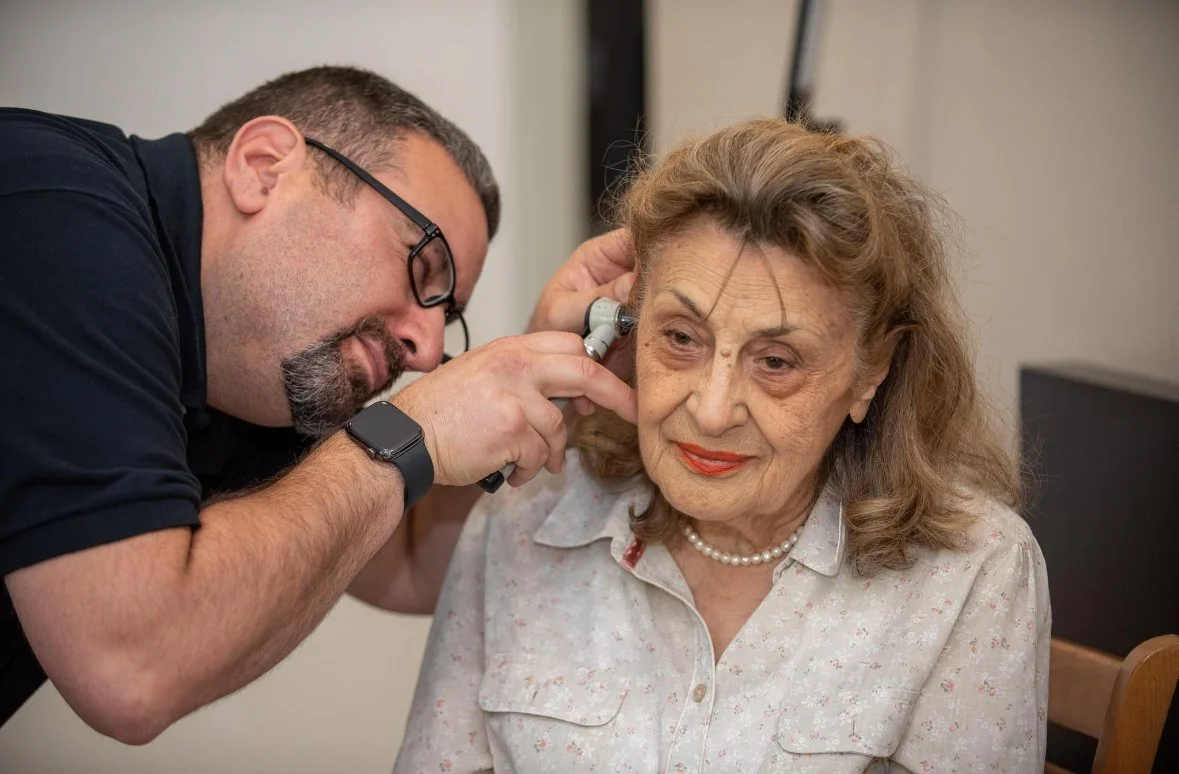
This day was a blend of training and fittings. I spent most of the morning teaching local clinicians how to fit digital hearing aids. It was a great experience to share my knowledge with those who had limited or no experience with this technology. I taught them everything from using directional microphones to ensuring the proper fit for each patient. The learning curve was steep, but the clinicians were eager to absorb new information.
Photos courtesy of the author
The highlight of my day was fitting a well-known woman who had been wearing underperforming hearing aids for years. When I first fitted her with new hearing aids, she was shocked by the clarity of her own voice and initially didn’t like it. But after some adjustments, we found a setting that worked, and she was able to hear others much more clearly as well. It was a reminder that hearing aids aren’t just about amplifying sound but about finding a comfortable balance for each individual.
Another great day of learning and helping people hear their best!
Day 4
Today was like nothing I had ever experienced before. We were seeing nearly 300 patients in one day, and the process felt more like an assembly line than a typical clinic visit. We fit patients with hearing aids based on quick auditory assessments through hearing tests or by determining their needs on the spot. Some of the devices we used were older models, but the process was still effective. Seeing how many people we could help in such a short period was incredible.
My body was sore from standing on the pavement and bending to fit earmolds, but my heart was full. One of the women I had fit oa day earlier, a 93-year-old war veteran, came back to thank me personally. She told me she could finally understand the radio for the first time in years, a gift she’d never experienced with her old hearing aids. Her gratitude was overwhelming, and she even gifted me a beautiful piece of art as a token of her appreciation. It was a humbling moment, and it made me promise to return next year.
Day 5
By the final day, we had helped just under 700 people receive hearing aids. It was a monumental achievement. I remember feeling a deep sense of patriotism when a soldier, one of the veterans I’d helped, thanked me for my service. These men and women had risked their lives for their country, and to receive their gratitude for my small contribution was deeply moving.
One of my last patients was a blind, elderly man who had been a chess teacher. He shared his story with me as we worked on his hearing aids, and his joy at being able to hear better was contagious. When he left, he smiled and chatted with everyone, and he even spent extra time talking to a former student. That moment reminded me why I do this work: to bring joy and confidence to those who need it most.
***
As I reflect on these five days, I am filled with gratitude. I am grateful for the people I met, the patients I helped, and the opportunity to contribute to this important mission. Hearing is vital for living life fully, and assisting those who have struggled with hearing loss has been an honour.
Thank you to Heidi, Armen, and the entire team for making this mission possible. I look forward to returning next year, and I encourage anyone who would like to support the Armenia Hearing Aid Project to contact me at edmond@hearingaidsource.ca. ֎
***
This article was published in out Jan. 2025 issue.