Zoryan Institute’s oral history collection impacts WWI history
By Zoryan Staff
Imagine sitting with your great-grandparents and listening to their stories, learning the mundane details of their lives, their inner thoughts and emotions, and their perceptions of the world around them. Interactions like this form the basis of human history; the first historians did not write books; they told stories.
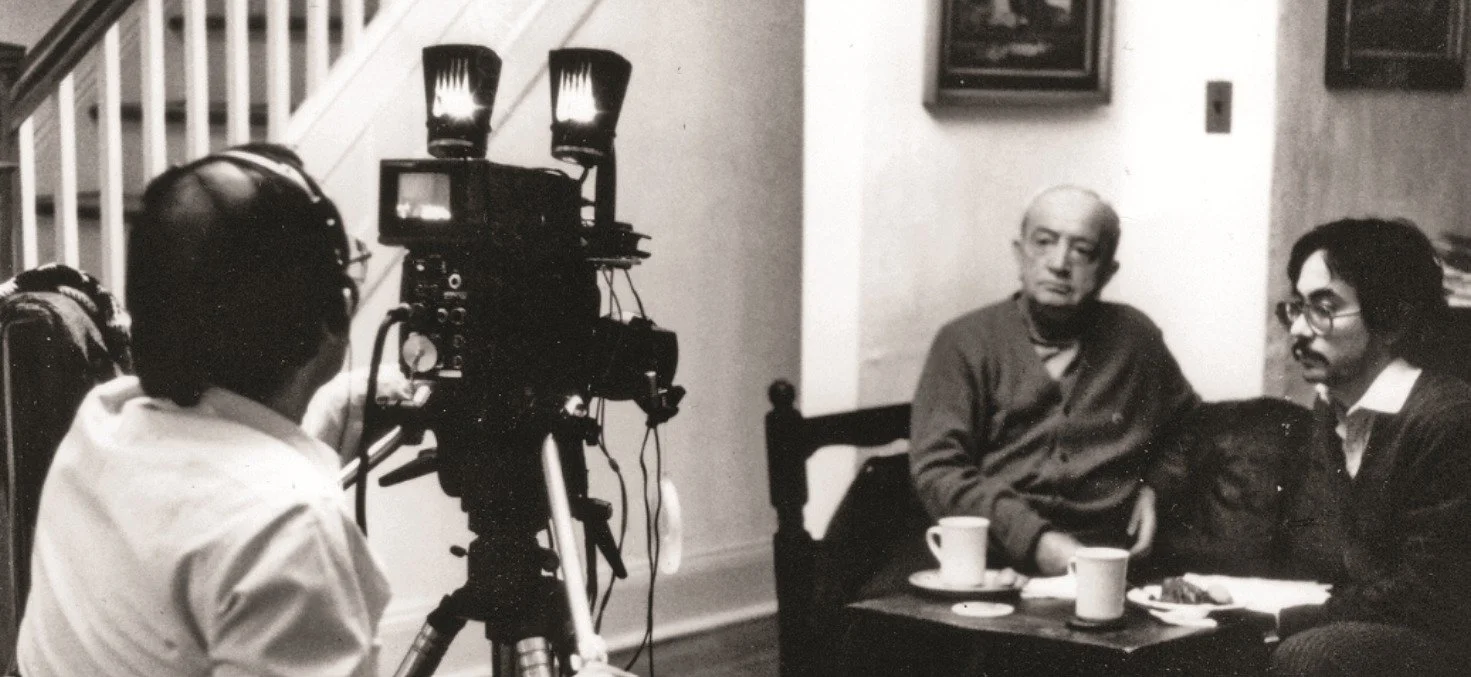
Photo courtesy of the Zoryan Institute
Oral history is the process of documenting these stories (called oral tradition) through structured interviews that ask questions. It connects generations past and present. Oral history is a treasured primary source that lets people learn their history and culture in their own words.
Zoryan Institute, from its inception in 1982, realized the importance and urgency of preserving the testimonies of ageing Armenian Genocide survivors who had lived through the horrors of the Genocide during the First World War. The Institute conducted over 800 audio-visual interviews with a trained team of camera operators, scribes, and trained interviewers to create an oral history collection archive. The audio-visual equipment used then was expensive and bulky – a far cry from today’s portable and affordable cameras. Each interview used a questionnaire prepared by psychology, history, sociology, and anthropology specialists. The questions sought to uncover the details of everyday life, prompting interviewees to recount the details of the homes they lived in and the games they played, questions scarcely asked by scholars.
It is the largest, most extensive oral history collection of Armenian Genocide survivors, with interviews in cities like Beirut, Boston, Los Angeles, Montreal, New York, Paris, Toronto, and Yerevan, in several languages, including Armenian, English, Arabic, and Turkish. The historical, social, and ethnographic information they contain, the deep emotion they convey, and the preservation of Armenian identity and life make these interviews a source of inspiration and a valuable academic resource. The interviews with survivors who became Canadian citizens are now being transcribed and subtitled to become accessible to an international audience.
Filmmakers, scholars, and researchers have used these interviews as the basis of their work, with two major films utilising the collection. An Armenian Journey (1988) and Aurora’s Sunrise (2022) have been celebrated by critics and viewers alike for their ability to relay the stories of Armenian Genocide survivors to a new generation in an accessible format.
Oral history helps us to understand how individuals and communities experience the forces and factors of history, rounding out written history with intimate insights into the lives of generations past. These first-person accounts serve as the material from which to carve images of history. Although the survivors are all gone, their legacy lives on for future generations to understand what they went through, what was lost, and what it means to be an Armenian. ֍
This piece was published in Torontohye’s Oct. 2024 issue.