Stephen Lewis (1937–2026): A global humanitarian, a local ally
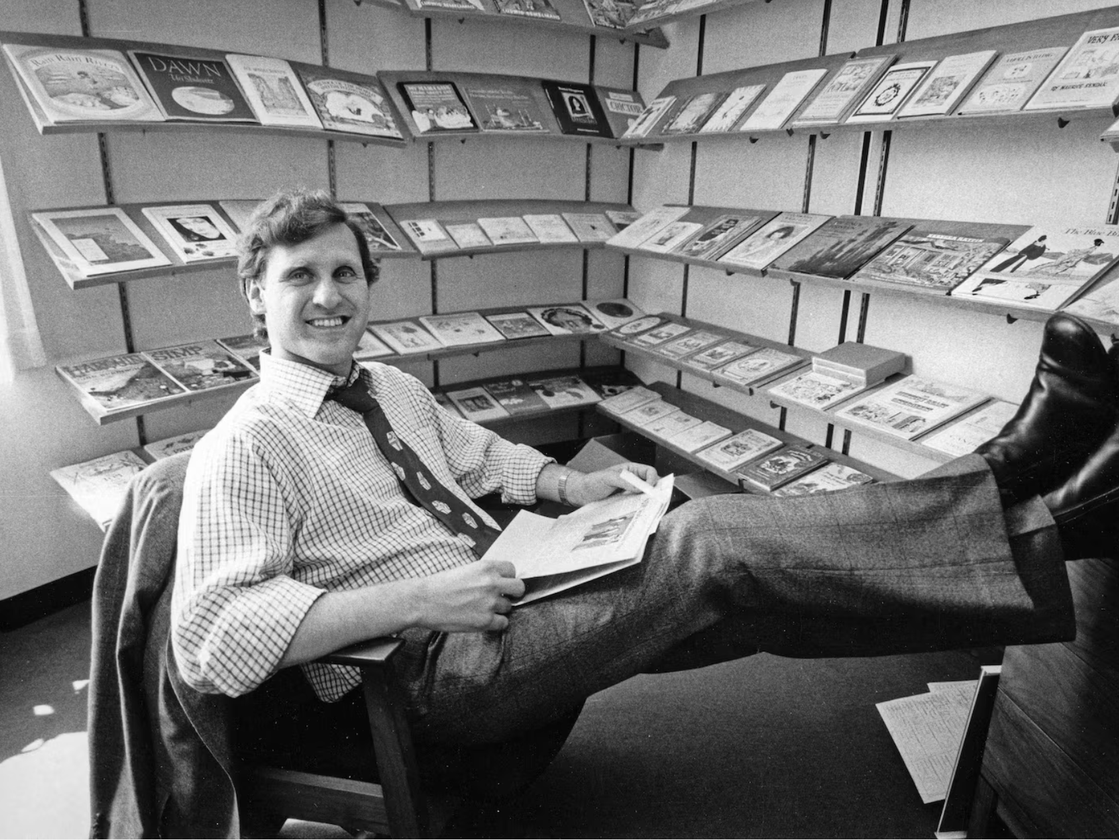
TORONTOHYE—Stephen Henry Lewis, the former Ontario NDP leader and Canadian Ambassador to the United Nations (UN), died in Toronto on March 31, 2026, at the age of 88.
Lewis spent his final days at Kensington Hospice, ending a life defined by a relentless insistence on human dignity. While he is celebrated globally for his work as the UN Special Envoy for HIV/AIDS in Africa and his fight against apartheid, the Armenian-Canadian community remembers him as a rare political leader who chose truth over ‘diplomatic silence’ when it mattered most.
In 1980, the Armenian community in Toronto gathered to mark the 65th anniversary of the Armenian Genocide. At that time, the word 'Genocide' was often avoided in official circles to sidestep political friction. Stephen Lewis, having recently moved on from his role as leader of the Ontario New Democratic Party (NDP), chose a different path. He delivered a keynote that cut through the era's hesitation, asserting that the world's failure to recognize the events of 1915 was an ongoing injustice. In a stirring address, he argued that historical recognition is a prerequisite for collective healing, stating:
“Communities need an acknowledgment of what happened in the past. You can’t deny, you can’t impugn, you can’t eradicate the past... if it isn’t acknowledged, then it feels like a kind of psychological and cultural amputation. It was true for the Jews. It must be true for the Armenians.”
His advocacy was grounded in rigorous research and a refusal to compromise on historical facts. This principled stance made him the first recipient of the Outstanding Canadian Award in 1985, presented by the Armenian Community Centre of Toronto. Former Member of Provincial Parliament (MPP) and Speaker of the Legislative Assembly of Ontario, David Warner, who co-sponsored the resolution recognizing the Genocide in the Legislature, recalled the weight of Lewis’s influence back in 2020. Reflecting on the 1980 commemoration, Warner noted that Lewis’s “eloquence and passion” galvanized other politicians to act. “He had researched the topic even more thoroughly than I had,” Warner stated, crediting Lewis with providing the moral momentum needed to secure recognition for the cause of justice.
Beyond the podium, Lewis’s commitment extended into the Canadian classroom. In 2008, he was a lead signatory on a high-profile call to action supporting the Toronto District School Board’s (TDSB) decision to establish a formal genocide curriculum. Rejecting “realpolitik expediency,” Lewis fought to ensure the Armenian Genocide was taught alongside the Holocaust and the Rwandan Genocide. His efforts were instrumental in the creation of the Grade 11 course Genocide: Historical and Contemporary Implications, ensuring that future generations would study the “horrendous consequences of racism, intolerance and prejudice” through a lens of historical truth.
Lewis’s political life began in 1963 when he was elected to the Ontario Legislature at age 26. He led the Ontario NDP from 1970 to 1978, elevating the party to Official Opposition status in 1975. After provincial politics, his influence expanded to the global stage. As Canada’s Ambassador to the UN (1984-1988), he worked with Prime Minister Brian Mulroney to denounce apartheid in South Africa. Later, as the UN Special Envoy for HIV/AIDS in Africa, he became a fierce critic of the World Bank and G8, accusing global powers of failing to meet their responsibilities to the continent.
His commitment to the Armenian people remained active throughout the years. During the 2020 Artsakh War, Lewis spoke out against the existential threat facing Armenians, once again demanding that the world confront history rather than merely observe it. The Armenian National Committee of Canada (ANCC) described Lewis as a “titan of Canadian public life” and a “cherished friend” whose role in Genocide recognition was pivotal.
Lewis’s death occurred just two days after his son, Avi Lewis, was elected leader of the federal New Democratic Party. He is survived by his wife, Michele Landsberg; his children, Ilana, Jenny, and Avi; his siblings, Janet, Michael, and Nina; and four grandsons. In a statement, his family noted that he battled his final illness with the same “indomitable energy” he brought to his lifelong work. For the Armenian community, that energy leaves a legacy of recognition and a reminder that silence is never an option for a person of conscience.
Memorial information
A public memorial to honour the life and legacy of Stephen Lewis will be held on Sunday, April 26, 2026, from 11 a.m. to 12:30 p.m. at the Chrysalis Theatre at Toronto Metropolitan University (43 Gerrard St. E, Toronto). Due to an extraordinary outpouring of love, the venue is currently at full capacity. However, a waitlist has been established for those wishing to attend in person, and organizers are exploring the possibility of an overflow room.
Those interested in attending are encouraged to join the in-person waitlist; seats will be offered via email as they become available. Alternatively, the service will be livestreamed and recorded for those unable to attend. You may register here for the livestream to watch in real time or receive the recording afterward. For further updates and to download the memorial program, please visit the Everloved memorial site.
In honour of Lewis’s lifelong commitment to justice, the family suggests that donations be directed to the Stephen Lewis Foundation.