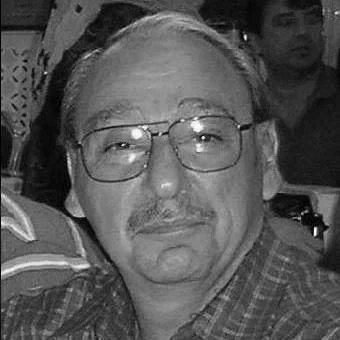
Reclaiming heritage: Professor Lorne Shirinian’s Armenian journey
"At first glance, it may appear that this young Armenian boy abandoned his heritage in order to better fit into a very English society. The issue is a lot more complex than it might seem," reflects Professor Lorne Shirinian. Born in Toronto in 1945 to orphan survivors of the Armenian Genocide, Shirinian's journey is a tapestry of cultural reclamation and literary activism. With an academic career spanning over three decades and a prolific output of over 30 books, he has become a key figure in Armenian diaspora literature.
Professor Shirinian completed an Honours BA in French language and literature at the University of Toronto, an MA in Comparative Literature at Carleton University, and a PhD in Comparative Literature at l’Université de Montréal. He founded and edited Manna: A Review of Contemporary Poetry (1971-1974) and lived, taught, and wrote in the Montreal area for 20 years. In 1994, he moved to Kingston, Ontario, where he became a Professor in the Department of English at the Royal Military College of Canada. He retired as Professor Emeritus of English and Comparative Literature in 2010 after 35 years in the profession, returning to Toronto in 2014 to continue writing full-time.
The son of Mampre Shirinian (Boy #73) and Mariam Mazmanian (Girl #16) of the Georgetown Boys and Girls, both orphan-survivors of the Armenian Genocide, Professor Shirinian has devoted much of his life to chronicling Armenian history and raising awareness about the Genocide. He also revised, edited, and wrote the introduction to the 2009 revised edition of Jack Apramian’s book, The Georgetown Boys, published by the Zoryan Institute. From his early reluctance to embrace his heritage to becoming a dedicated chronicler of Armenian history, Professor Shirinian's life is a testament to the enduring power of identity and memory.
***
Hrad Poladian: As a young boy, you shied away from everything Armenian, which is quite evident in your writings. I would now like to take you back a few years. In one of your essays on the occasion of the 50th-anniversary reunion of the Georgetown Boys, you wrote that you went unwillingly and stayed apart as an observer. But then something happened. What was it that made you affirm your Armenian identity and heritage?
Lorne Shirinian: Thank you for your question, Hrad. I grew up as an Armenian Canadian in the early fifties in Toronto. At first glance, it may appear that this young Armenian boy abandoned his heritage in order to better fit into a very English society. As I’m sure you are aware, the issue is a lot more complex than it might seem. I’m grateful for the opportunity to share with you and your readers the twists and turns of my journey as the son of two orphan survivors of the Armenian Genocide, who, after losing everything, escaped with their lives to begin new ones first at the Georgetown Orphanage, then in Toronto. My maternal uncle arrived with the first group in 1923; my father landed in 1924; my mother came in 1927. I was born in 1945 and became the inheritor of a lot of history, much of which was tragic and dramatic.
Poladian: Can you tell us more about your childhood and the atmosphere in your home regarding your heritage?
Shirinian: As a young boy, I was certainly aware that there was something in our family background that continually weighed on everyone, something very heavy and sad. Whenever the Georgetown Boys and Girls visited us, there was always a lot of joy and laughter. Inevitably, when the coffee, tea, and cookies were served, the tone of the discussion would become sorrowful, and as personal stories of survival were retold, people would cry. I never knew the cause of this. I usually sat on the stairs where I could listen and observe everything. The language in our house was always Armenian, which I spoke until I began to go to public school at the age of six. Even as an adult, our parents spoke Armenian to each other and often to my brother George and me. After my first year of public school, I responded to them, to my regret, in English. My father taught Armenian to his friends and tried his best to teach me. I recall sitting at his desk and writing ayp, pen, kim. However, there were too many distractions and sports to play with my friends.
Poladian: Despite these distractions, how did your father's influence and the resources at home shape your understanding of Armenian culture and history?
Shirinian: To counterbalance this gap in my knowledge of the Armenian language, I had access to the large collection of books on Armenian history and literature my father had collected, as well as Armenian music. I still get emotional when I recall as a young boy playing the record of Armenag Shah Mouradian singing the songs of Gomidas, Kele Kele, in particular. As teenagers, we knew about the Armenian Genocide and felt there was something profoundly different about us that we shared with other Armenians around the world. The mother of one of my best friends always reminded me that when she was growing up, she remembered her mother telling her to eat all her food; “Remember the starving Armenians,” she was told.
Poladian: Did you ever truly distance yourself from your Armenian heritage, or was it always present in some form?
Shirinian: To answer your question honestly, I never abandoned my Armenian heritage. As a teenager, my attention focused on sports, then in university on my studies. My brother and I were still involved on the periphery of the Armenian community; for example, Father Tashjian, who was a family friend, listened to our idea of opening a bookstore at Holy Trinity Church on Woodlawn Avenue. The parish council agreed, and we brought in many Armenian books in English and records for community members, which we sold after the service on Sundays. At the end of the first year, we returned the money from sales to the church, five thousand dollars. Not bad for the early sixties. As I became friends with many Armenian poets who wrote in English, I organized a poetry reading at the church which over one hundred community members attended. There was a thirst for the arts in the community at that time. English was our outlet. The idea of hybridity was not understood nor accepted yet.
Poladian: How did the arrival of Armenians from the Middle East in the early 1970s impact the local community and your sense of identity?
Shirinian: In the early 1970s, the local community welcomed many Armenians from the Middle East, especially from Lebanon. They were part of Armenian communities in which their members could go to school in Armenian and live a good part of their lives in Armenian. That wasn’t possible here at that time. Being Armenian meant speaking Armenian. That’s understandable. Living in the North American diaspora back then was complex in a different way. For many years I wore a coin from the era of Tigranes the Great around my neck. I was projecting my Armenianness. Nevertheless, not being able to communicate in Armenian undercut what I was trying to be.
Poladian: What academic and literary influences helped you reconcile your identity and focus your career on Armenian issues?
Shirinian: During my MA year at Carleton University in Ottawa (1971-72), I spent a lot of time reading the work of the Martiniquan poet Aimé Césaire (1913-2008), particularly his long poem cycle, Cahier d’un retour au pays natal (1939), which was a major text of anti-colonial activism and a major force for pan-African culture. He and Léopold Sédar Senghor, the first president of Sénégal, were the major exponents of négritude, a movement which sought to reclaim the value of blackness and African culture. At the same time, I was reading as much Armenian history and Armenian literature in English and in translation as possible. There wasn’t much available at that time, and what came from Soviet Armenia was highly questionable. In 1972, my first book of poetry, 'Manuscript, Tom Sturgess', was published. I wanted to write. I wanted to express my Arménitude. Armenia was a colony of Russia. Armenians around the world wanted an independent Armenia that would represent us and be a home. The connection was clear. I decided that my writing career would focus on reclaiming Armenian history. Because I was not able to work in Armenian, I wrote about what I knew, the Genocide, and the after-effects on those who survived and their sons and daughters.
Poladian: Was there a specific moment when you decided to dedicate your life to writing about Armenian issues?
Shirinian: That was the moment in 1972 when I thought that I could try to do the same for those of us in the North American diaspora that Césaire did for his people in 1939. Write. Not only to write but to take direct action. I marched many times on April 24 and spoke about Armenian diaspora literature written in English and the Genocide at many conferences in North America and Britain. My poems were translated into French and Armenian. In 1974, I contacted the Armenian American poets I knew who were mostly from the second generation as I was and edited and published 'Armenian North American Poetry: An Anthology' (1974). It was the first such volume to gather our poems from the North American diaspora.
Poladian: Your activism played a significant role in the Canadian government's recognition of the Armenian Genocide. Can you share some details about this journey?
Shirinian: My activism continued. In 2001-02, I, along with my friend and colleague, Alan Whitehorn, visited MPs and Senators in Ottawa to tell them the story of the Genocide and the Georgetown Boys and Girls. Through continued pressure from the entire community, the federal government finally recognized the Genocide on April 25, 2004. The key moment, Hrad, that changed my life and direction was understanding that I could dedicate myself through writing to Armenian subjects. Almost all my work since then has been to raise the consciousness of our fellow citizens and others about the Genocide, the ongoing trauma, and the depth of Armenian diaspora literature written in English. My doctoral thesis developed a theoretical and critical framework for understanding Armenian literary texts in English and French as Armenian diaspora literature. In addition, I had hoped that through my example as one who lives on the edge of the community and understands and speaks only a little Armenian, I can still claim that I am an Armenian writer whose works have resonance with Armenians.
Poladian: Professor, I thank you for this interview. In conclusion, do you have a message for the young Armenian youths of Canada?
Shirinian: We all live in history. Make your lives important and relevant, not only for yourselves and those around you, but for those who will follow you. Find your voice. Find your path. Remember the long and rich heritage of which you are a part. ֎
( Shirinian at the Hamazkayin Toronto H. Manougian Library, 2024; Photo: JH Kuzuian)