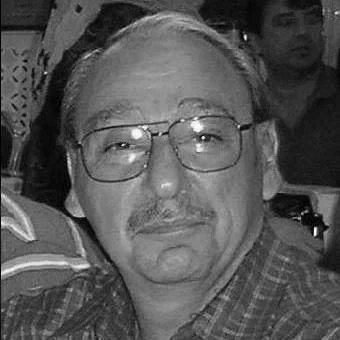
Bridging histories: Alan Whitehorn on genocide, identity, and the ongoing Armenian struggle
"Silence was not an option for me as an Armenian-Canadian and genocide scholar," reflects Alan Whitehorn, an emeritus professor at the Royal Military College of Canada (RMC Canada CMR). With a career spanning decades, Whitehorn has become a leading voice on genocide, human rights, and Armenian identity. His deep personal connection to the Armenian Genocide — his grandmother Siroun Alajajian/Hamamjian was an orphan of the 1915 atrocities — has driven much of his scholarly and poetic work.
Whitehorn's academic background includes a BA from York University and a PhD in political science from Carleton University. His contributions to genocide education and the recognition of the Armenian Genocide have been profound. He has authored numerous influential works, including The Armenian Genocide: Resisting the Inertia of Indifference (2001) and Ancestral Voices: Identity, Ethnic Roots and A Genocide Remembered (2007). His work seamlessly blends rigorous academic analysis with heartfelt poetry, offering both intellectual and emotional insight into the impact of genocide.
In this interview, Professor Whitehorn delves into his family history, his career as a political scientist and poet, and his ongoing commitment to preserving Armenian identity and educating future generations on the importance of historical memory.
***
Hrad Poladian: Can you please tell me about your family history?
Alan Whitehorn: My family's story begins with my grandmother Siroun Alajajian/Hamamjian, an Armenian orphan of the 1915 Genocide, who lived in refugee camps and orphanages for over a decade. As part of the globally-displaced Armenian Diaspora, she moved to Greece, then to Egypt and later emigrated to Soviet Armenia in the late 1940s. In the 1960s, her last move was to Canada. Here, I met my metzmama for the first time, while I was a university student.
My Armenian mother and British-raised father married in Alexandria, Egypt, at the end of World War II. It was East meets West. My parents, like so many other families, immigrated to Canada in 1953. At that time, it was an English-dominated country, and it would be another decade before multiculturalism achieved fuller bloom, and we became more involved in the growing Armenian-Canadian community in Toronto.
Poladian: What was it like for your family adjusting to life in Canada in the 1950s?
Whitehorn: Canada in the 1950s was a very different place. It was still quite monocultural, and many immigrants had to work hard to integrate. It wasn't until the following decade, when multiculturalism became more prominent, that our family began engaging more actively with the Armenian-Canadian community.
As an Armenian-Canadian, I wanted to better understand my ethnic roots and how the international community reported on the Armenian Genocide during World War I. Commencing with an extensive search of the old Toronto Globe newspaper microfilm, I examined the daily accounts of the mass deportations and killings of Armenians in the Ottoman Empire during that fateful year, 1915. A decade later, in response to the contemporary Turkish government's genocide denial in the same newspaper, I penned a letter to The Globe and Mail citing the historical record. This led to an unexpected invitation to present a paper on the subject at a conference on ethnic minorities in the Ottoman Empire.
Needing significantly more background knowledge on the subject, I sought advice and borrowed books from my RMC colleague and fellow Armenian-Canadian scholar Lorne Shirinian. He and I decided to each present a paper at the conference. Both became chapters in the conference's edited book. We subsequently used the chapters in our co-authored book 'The Armenian Genocide: Resisting the Inertia of Indifference' (2001). The book became an example of successful education and lobbying of Members of Parliament that fostered the Canadian government's recognition of the 1915 genocide. The book utilized historical analysis and poetry, which was an effective combination. Two of my poems were cited in the Parliamentary debates and the official Hansard.
Poladian: What inspired your later works on Armenia and Artsakh?
Whitehorn: I finally was able to travel to Armenia and Nagorno-Karabakh (Artsakh) in 2005. It was a life-altering trip. I penned a poem or two at the end of each eventful day. Soon, a diary of the poems began to outline that existential journey and became the book 'Ancestral Voices: Identity, Ethnic Roots and A Genocide Remembered' (2007). I hoped it would be a personal guidebook for others who might follow a similar path of exploring their ethnic and cultural identity in our historic ancestral land.
Genocide unfortunately continues even today, including in the form of active state-sponsored genocide denial and threats by the contemporary Turkish government. To address these problems, I actively supported the Toronto District School Board's (TDSB) efforts to introduce genocide education in the high school curriculum. My written presentation to the TDSB in 2007 was later reprinted in the local Kingston newspaper.
Poladian: Can you talk about the reaction to your work, particularly with the Turkish government?
Whitehorn: The Turkish government took note of my ongoing efforts for public recognition of the Armenian Genocide. In 2008, the Turkish Ambassador to Canada wrote a two-page official complaint to the Canadian Minister of Defence. The formal letter demanded that I cease all such genocide education activities or risk significant adverse impact on Turkish-Canadian relations. The Canadian government defended my academic work, while I continued my lectures and penned a number of poems expressing my concerns, reactions, and reflections about the difficult and problematic situation. These writings became the basis of the book 'Just Poems: Reflections on the Armenian Genocide' (2009). It was an exceedingly stressful and potentially dangerous time, but silence was not an option for me as an Armenian-Canadian and genocide scholar.
Poladian: It seems Armenia has had a lasting impact on you. Can you tell us more about your connection with the country?
Whitehorn: I often returned to Armenia over the next decade, with annual month-long visits, and frequently lectured at the Armenian Ministry of Foreign Affairs, Ministry of Defence, Writers' Union, and key universities. Poems from these eventful trips can be found in the bilingual 'Return to Armenia/Վերադարձ դեպի Հայաստան' (2012). As I continued to write about the Armenian Genocide, I received an invitation to author key entries on the Armenian case study in the major international encyclopedia 'Modern Genocide: The Definitive Resource and Document Collection' (2014). Building upon this work, the staff at ABC-CLIO and I decided to publish an Armenian-focused volume in time for the 100th memorial of the 1915 Genocide. I authored many articles and edited the pioneering book 'The Armenian Genocide: The Essential Reference Guide' (2015). The 425-page encyclopedia included overview essays, 150 subject entries, a chronological timeline, maps, photographs, and an extensive selection of historical documents. It is the only scholarly encyclopedia in English on the Armenian Genocide. Copies have even appeared in major Turkish university libraries.
Poladian: How has the conflict in Artsakh influenced your recent work?
Whitehorn: Over many decades, the status of the Armenian community in Nagorno-Karabakh has been of great concern. It had been an uneasy part of the Azerbaijan republic in the former federal Soviet Union, but in the late 1980s, the region declared its independence and its strong wish to join Armenia. The Azerbaijani government used brutal armed force to oppose the local population's democratic vote. These events led to the First Karabakh War of the late 1980s and early 1990s, followed by an unstable, decades-long ceasefire. The 44-day Second Karabakh War of 2020 shattered the so-called' frozen conflict'. I penned a number of poems in the Yerevan press as the tragic events unfolded, and they were later published in the book 'Karabakh Diary: Poems from the Diaspora/Ղարաբաղյան օրագիր. բանաստեղծություններ սփյուռքից', (2022). The poems were about Armenian loss and grief unfolding once more. Tragically, the genocide of Armenians continued, with the Azerbaijani government's subsequent blockade and siege of Artsakh/Karabakh. Yet, another territorial war led in 2023 to the forced exodus of the entire Karabakh Armenian population. Threats and dangers to the Armenian people persist. We still need to be vigilant in self-defence.
Poladian: You are both a political science professor and poet. Can you tell me more about exploring both styles of writing?
Whitehorn: The complex topic of genocide has been explored both in important analytical academic studies and in more personal, but quite moving, expressions in the arts. The arts often have a way of reaching a larger audience more directly than scholarly books. We can benefit from both forms of communication. To begin to convey the enormous magnitude of the impact of genocide, we need to tap not only the analytical mind but also the compassionate heart. Accordingly, I have often employed both the methods of the analytical academic political historian and the more personal artistic expression of the poet.
Poladian: You have been to Armenia many times. What are your thoughts on what is happening in Armenia today?
Whitehorn: Armenia continues to live in exceedingly difficult times and faces multiple challenges and crises. It is a tiny, land-locked country, surrounded by authoritarian regimes which pose strategic risks and threats. Defence and security concerns are paramount—the potential scenarios for decision-makers in Yerevan range from bad to worse to catastrophic. Armenia is amid a complex and challenging international realignment from an old Cold-War Moscow-centric orbit to enhanced pan-European/Western contacts and eventually to step-by-step greater economic and social integration with the democratic European countries. It will be a long process, with substantial obstacles ahead, but it is a necessary transformation.
Poladian: Thank you for this invaluable interview. Do you have a message for the youth of Canada?
Whitehorn: To the youth living in the Diaspora, it is essential not only to study and learn our national history and culture but also to visit Armenia and see the land first-hand. However, it should not be just for a brief holiday and existential exploration of family roots, but also to volunteer or work with colleagues there. In an age of jet planes, email, the internet, and Zoom, these seem more feasible. We can achieve dynamic, productive, and ongoing interactions between the Diaspora here in Toronto and fellow Armenians in Yerevan. For example, I continue working with colleagues in various sectors, including literary writers, university academics, and government officials. The Republic of Armenia is exceedingly vulnerable today. It urgently needs the sustained support of the entire global Armenian nation. We here in Canada can offer substantial and talented human resources to assist our besieged fellow Armenians. We live in hope, but we must do far more. Working together, we can do this. Whether our expertise is in the arts or the social sciences. Or perhaps both! ֍
***
This conversation was published in our Oct. 2024 issue.