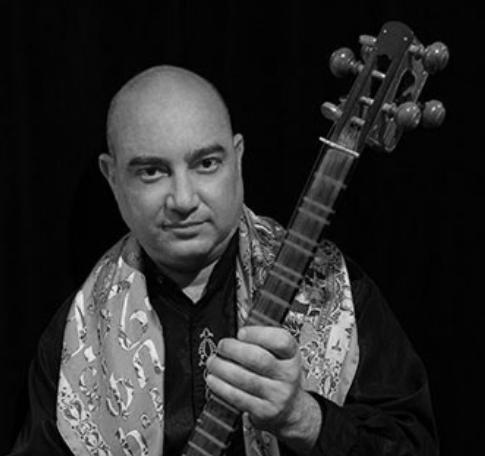
Quiet fortune, loud echoes: A personal account of Koko Bahlawanian and Pe-Ko Records

A proverb often attributed to Seneca says, "Luck is what happens when preparation meets opportunity." In the Armenian diaspora, luck rarely arrives loudly. It comes quietly, through people who open doors, through places that become gathering points, and through moments that shape us long before we understand their significance. For me, one of those moments came when I was 13 years old and met producer, promoter, and founder of Pe-Ko Records, Koko Bahlawanian.
Pe-Ko Records is a corner store on a quiet residential street in Montreal, Canada. Armenians across North America and beyond know it as a cultural landmark, a place where the music of our people and neighbouring cultures was preserved, produced, and shared. Since 1970, Pe-Ko has housed one of the most important collections of Armenian, Arabic, and Greek music on vinyl, 8-track, cassette, and CD. It is the kind of place where you walk in for a recording and walk out with a story, a memory, or a connection you didn’t expect.
The name Pe-Ko itself carries a story. It is a tribute to the bond between father and son, Peter and Koko, a reminder that Armenian enterprises often begin with family, with legacy, and with the desire to build something that lasts. And lasting is exactly what Pe-Ko has done. While record stores around the world closed their doors with the rise of digital streaming, Pe-Ko remained open, serving a community that still walks through its doors. Fifty-five years later, it is still in business, which is a rare achievement in any industry and a rarity in the world of physical music.
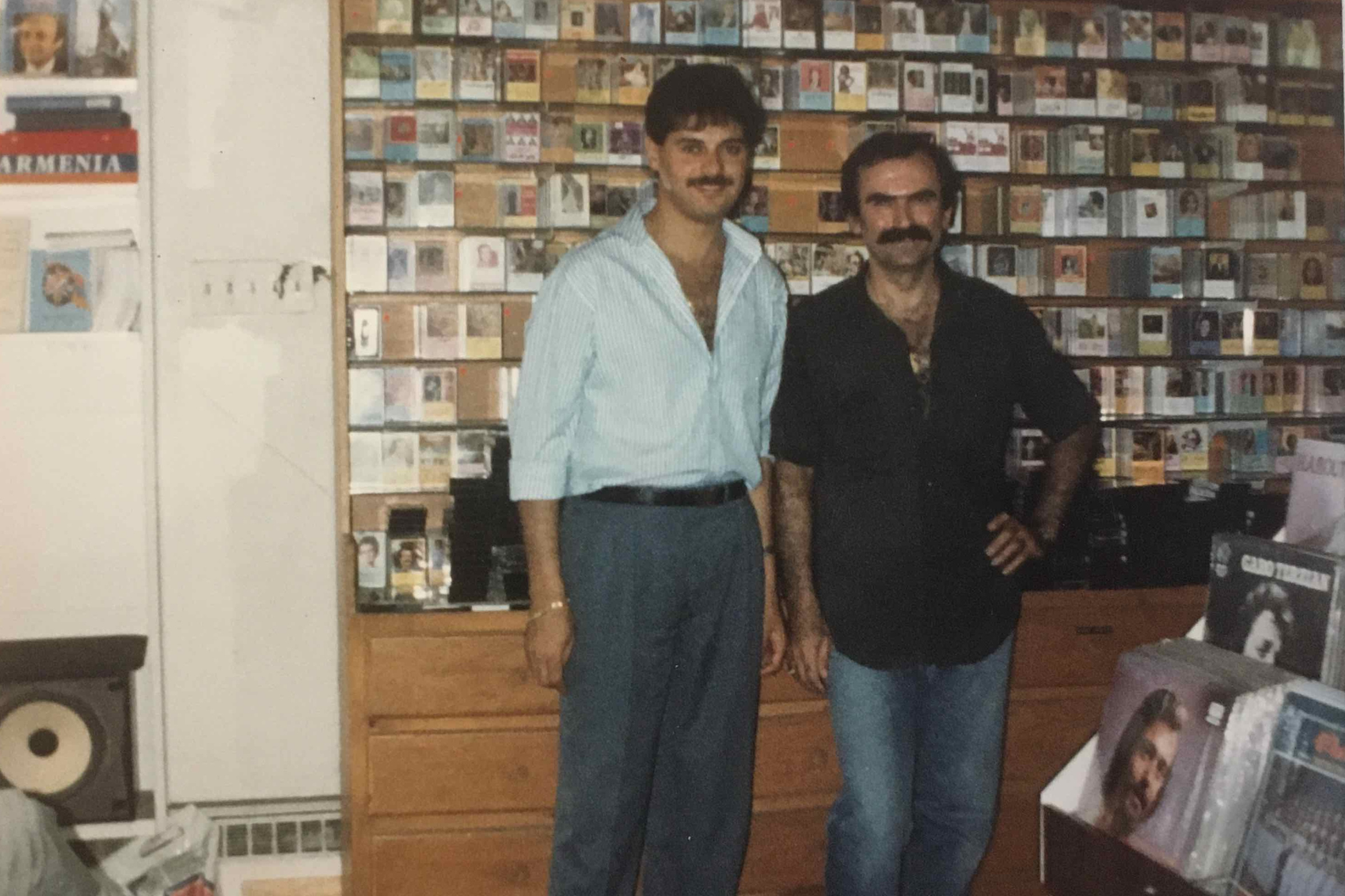
“The name Pe-Ko itself carries a story. It is a tribute to the bond between father and son, Peter and Koko…” (Photo: analogarmenia.com)
Koko’s story, like so many Armenian stories, begins with survival. His father, Khatchig Pehlivanian, was a child of the Armenian Genocide. Orphaned at a young age, he escaped through the desert in 1916, eventually reaching Lebanon, where he built a life with his wife, Arshaluys, who was also an orphan. Their story mirrors that of countless Armenian families, including my own. My grandparents were from Aintab and Adana; our histories run parallel, shaped by loss, resilience, and the determination to rebuild. Perhaps that is why Pe-Ko records always felt familiar to me.
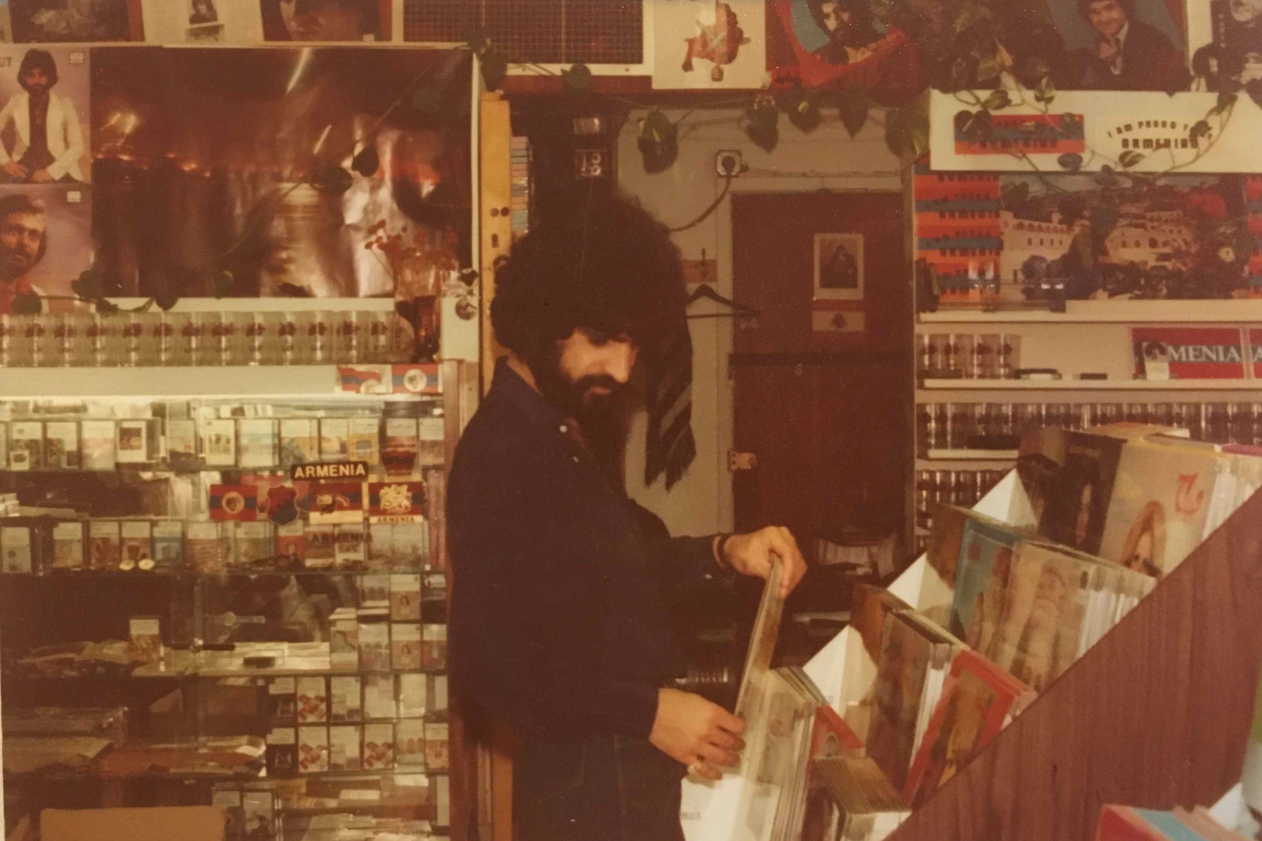
Armenian music legend Harout Pamboukjian browsing records at Pe-Koi in Montreal. Undated. (Photo: analogarmenia.com)
Music entered my life early when, at age five, I received a toy guitar for Christmas—a gift that set everything in motion. Growing up in a family of three generations of musicians, including my uncle, Professor Joseph Ichkhanian, who founded Lebanon’s classical guitar program and authored the enduring Méthode Moderne de Guitare, I was immersed in music from the start. During the Lebanese Civil War, I studied classical guitar with him before emigrating to Toronto, where my musical world expanded to include the electric guitar, jazz, and improvisation under my father, Edouard, a jazz pianist and music director for pioneer Adiss Harmandian. My education was further enriched through private lessons, school music programs, and the influence of Giro ammo (Giro Dolmayan), the saxophonist in my father’s band, who often took me to hear international jazz artists—experiences that left a lasting impression on my musical journey.
By the early 1980s, Toronto and Montreal’s Armenian communities were flourishing. Churches, schools, and community centres were being built, and every fundraiser or celebration needed live music. My father’s band, with me as the young guitarist, became a fixture at these events. Armenian music was the heartbeat of these gatherings, and I quickly realized that if I wanted to contribute meaningfully, I needed to learn the repertoire. My first opportunity came when I performed with Adiss Harmandian at 13, a moment that felt like destiny, having spent my childhood watching my father, Edouard, music-direct his rehearsals and concerts.
Montreal soon became a regular destination as its Armenian community was the largest in Canada, and we travelled there often for performances. A typical weekend meant leaving Toronto early Saturday morning, driving six to seven hours, performing until the early hours of the morning, sleeping a few hours, and driving back on Sunday. But before returning home, there were always three essential stops on Rue Dudemaine: knafeh b’jibneh from Mahrouse, man’oushé and lahmajoun from Zahle Bakery, and a visit to Pe-Ko Records to see Koko.
Walking into Pe-Ko was like stepping into a cultural crossroads. In this sense, Pe-Ko Records transcended the boundaries of a record shop. His store operated as a hybrid social and retail space, part Damascus café and part European salon. It became a liminal cultural node where social stratification temporarily dissolved, where musicians and audiences converged, and where diasporic identity was continuously rehearsed and negotiated. The store’s endurance and influence reflect the power of such third spaces to sustain artistic ecosystems, particularly within displaced and diasporic communities by way of music. You could hear Armenian, Arabic, French, and English in the same conversation. You could see elders flipping through vinyl while teenagers discovered the music their parents grew up with. You could feel the pulse of a community that had carried its culture across oceans and refused to let it fade.
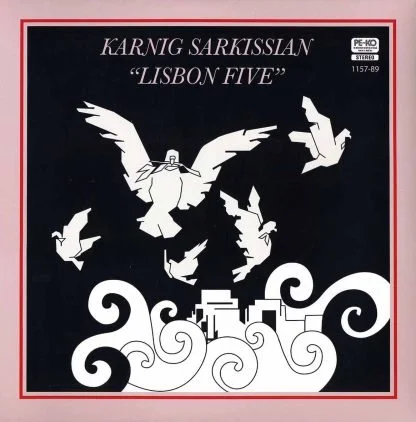
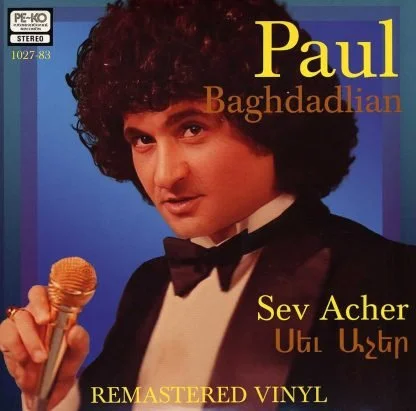
Koko was at the center of it all. He knew every artist, every album, every recording session. He knew which songs would resonate with which communities, which singers were rising, and which musicians were shaping the sound of the diaspora. He often shared pre-release recordings with me so I could learn the music before anyone else. He would tell artists, “This kid knows your music, inside out!” and those words opened doors I could never have opened alone. In many ways, he became a quiet mentor, not through formal lessons, but through access, encouragement, and belief.
From 1979 to 1991, I had the privilege of performing during the golden age of Armenian diasporic music. The period which preceded several major cultural shifts: the aftermath of the Lebanese Civil War, which dismantled Beirut’s once-vibrant Armenian cultural infrastructure; the collapse of the Soviet Union in 1991, which redirected musical and cultural gravity toward Armenia itself; the rise of digital media, which fragmented the shared cassette-era listening experience; and the transformation of rabiz into new post-Soviet and globalized forms. I performed locally alongside Toronto’s own Dikran Shemavonian, in addition to internationally acclaimed artists such as Adiss Harmandian, Paul Baghdadlian, Harout Pamboukjian, and their contemporaries, touring the world.
Today, through the lens of a doctoral candidate researching Armenian diasporic music, I see with even greater clarity how central Koko was to that era. He did far more than operate a record store: Pe-Ko Records in Montreal, and later, from 1983 onward, adding Pe-Ko Records in Los Angeles. He built an ecosystem that connected artists, retailers, and audiences across continents. He produced and distributed recordings directly to Armenian communities—at events, in libraries, and in Middle Eastern variety stores—allowing people to purchase the music and reexperience their favourite artists at home and in their cars. Armenian radio and television amplified the music further. As songs circulated, singers became familiar. Familiarity created demand. Demand created opportunities. In many ways, all artists shared a form of collective luck.
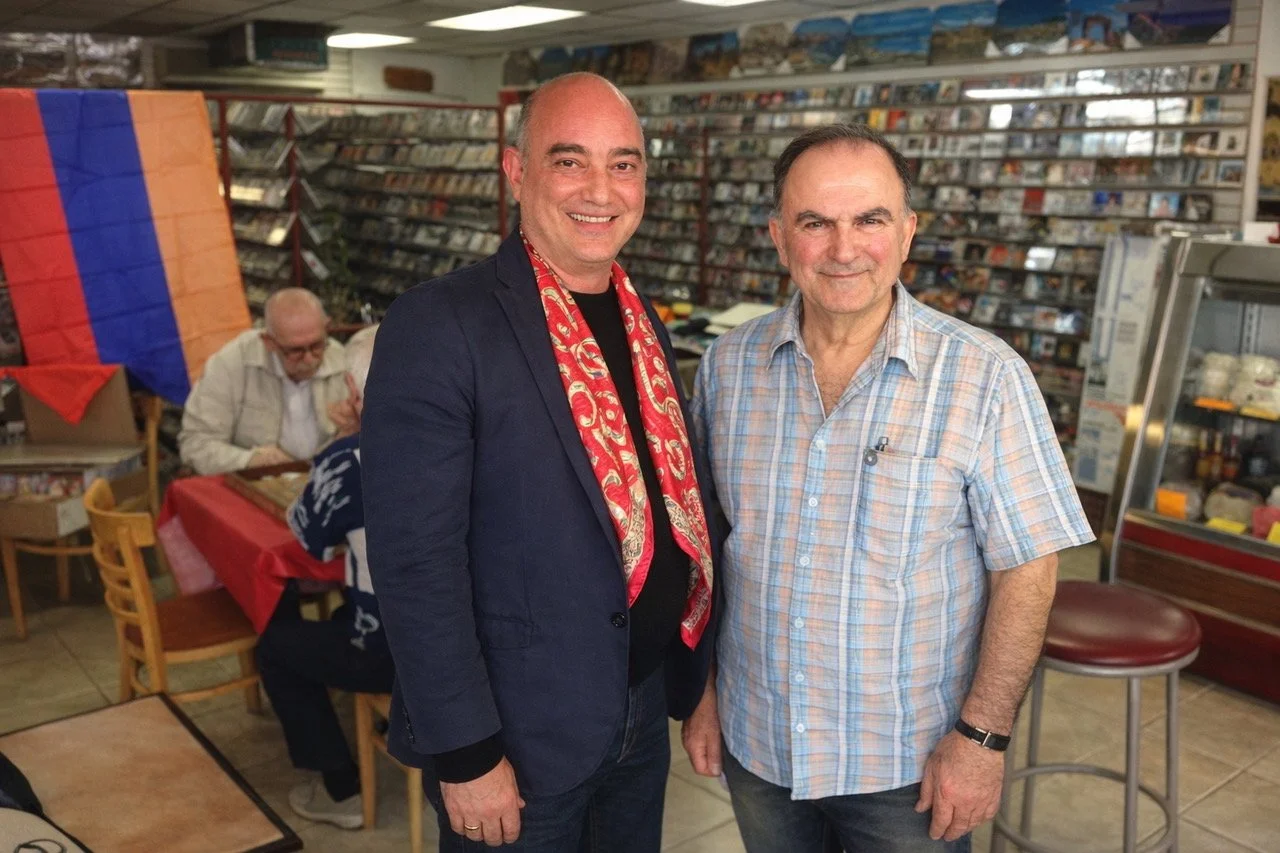
The author, Levon Ichkhanian (R), and Koko Bahlawanian at Pe-Ko Records. (Photo courtesy of the author)
Many tried to replicate Koko’s model. Few succeeded. None endured. Yet Pe-Ko Records is still here, still open, still relevant, still serving the community. The catalogue is being digitized, and select albums are being re-released on vinyl. The store remains a place people visit not just to buy music, but to reconnect with a piece of who we are. It is a living archive, a cultural anchor, and a testament to what one person can build when passion meets purpose.
Every time I’m in Montreal, I return to Pe-Ko Records to see Koko. Some forms of luck, it seems, are timeless.
Thank you, Koko. ֎
This piece was published in Torontohye's March 2026 issue (#223). Photo courtesy of the author.