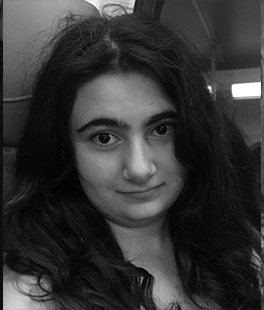
Asking Victoria Rowe et al. What does it take to research Armenian studies
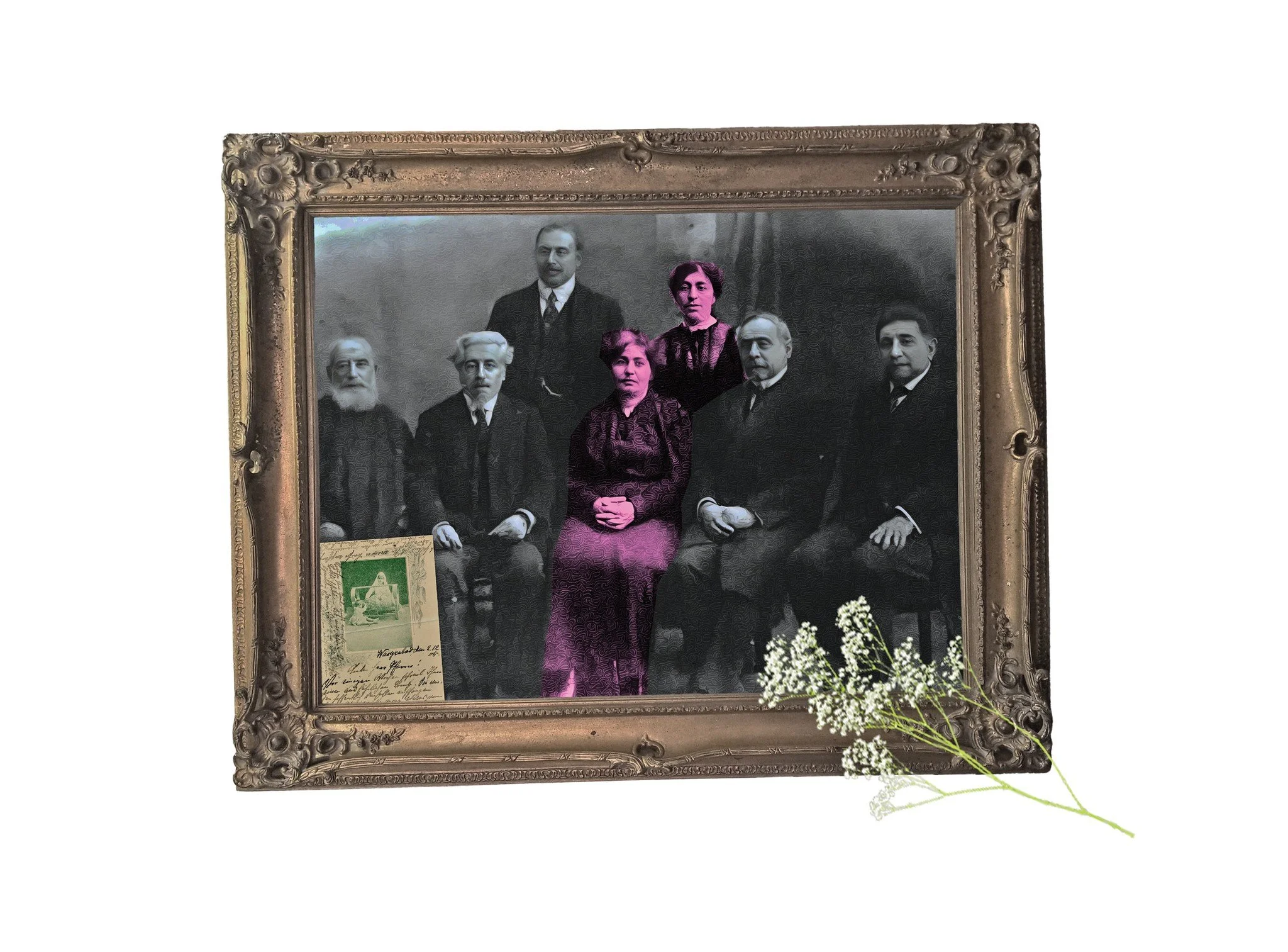
Dr. Victoria Rowe is a PhD graduate from the University of Toronto (UofT). Her dissertation entitled “The ‘New Armenian Woman:’ Armenian Women’s Writing in the Ottoman Empire, 1880-1915” was published in 2000 and is still available online via UofT’s virtual TSpace library. I connected with Rowe over two decades after her dissertation was published. The story of how I came to find her can be found in Torontohye’s Dec. 2024 issue.
As her name suggests, Rowe does not have a personal connection to Armenian identity or culture. Growing up in a multicultural city like Toronto fostered her interest in languages and culture. When she began her studies at UofT, she took a wide variety of courses on world history, languages, and literature; later, she chose to focus on studying Middle Eastern literature. Her specific interest in Armenian women’s writing sprung out of a chance encounter. She told me she came across Ara Baliozian’s partial translation of Zabel Yessayan’s autobiography while browsing the bookshelves and was immediately interested. “I think Zabel appealed to me because she was quite different from the other Middle Eastern women I read for my coursework,” she said, explaining why Yessayan’s life story intrigued her. “For example, she didn't come from the upper class, unlike many of the other women writers of her generation, so she wasn't cushioned by wealth and family. She was very independent and was not fully accepted by the male intelligentsia at the time. She took many risks, beginning with her move to Paris to study French and take courses, followed by her political activism.”
“The dissertation I wrote was the book I wanted to read when I first became interested in Zabel,” Rowe told me, explaining that at the time, there wasn’t much information available on Yessayan in English. Rowe was fulfilling a significant research gap through her work, so naturally, I was a bit surprised to learn there wasn’t much institutional support for her research at UofT.
“I got some grants which were awarded due to my work rather than my topic,” Rowe said when asked what type of research support she received from the university. “I was told [researching] Armenian women's literature wasn't a good idea because the [Near and Middle Eastern Civilizations (NMC)] department was focused on the Islamic world.”
While UofT might not have seen the value of Rowe’s work, she did find support from Armenian-Canadian writers. She was in contact with both Ara Baliozian and Lorne Shirinian, who encouraged her work. I was glad to hear there was some support for Rowe during her research since, as you can imagine, a non-Armenian researching an Armenian issue with few English sources in the 1990s and early 2000s was up against some significant barriers beyond just a lack of research support from the university.
One obvious barrier was the language barrier: Rowe did not grow up with knowledge of Armenian and did not read the language when she became interested in Armenian women writers. “I decided to try to learn Armenian on my own,” she told me. “I used a language learning book to study Armenian and eventually found another UofT student who spoke Armenian and gave me some lessons. I then made contact with Professor Kevork Bardakjian at the University of Michigan Armenian program and went on his summer language study to Armenia.”
Rowe’s commitment to learning the language to be able to conduct her research was inspiring. What was also inspiring and interesting was the fact that her visit to Armenia was not a short summer stay–she ended up spending two years in the country, learning the language at Yerevan State University (YSU).
Conducting research in person in Armenia proved to be very beneficial. “It was really in Armenia that I found the texts I needed for my dissertation and later work,” Rowe said. “Professor Bardakjian introduced me to resources at the National Library and the archives in Yerevan.”
However, I knew that Armenia in the late 1990s was far from a tourist destination. The Armenia I visited in 2024 for my experiential summer abroad was a place I could comfortably integrate into as an outsider: I was hanging out in techie cafes, talking about data science applications with IT start-up professionals, and ordering soy milk matcha tea lattes off the English menu. More than 30 years after independence, modern Armenia offers conveniences and accommodations that just didn’t exist in the late 1990s. I described this thriving tech scene—full of start-up bros and emerging tech unicorns—to Rowe, who confirmed that my experience was a stark and almost laughable contrast to hers.
Rowe lived in Armenia from 1998 to 2001, during the first decade after independence from the Soviet Union. This was also the period right after the First Artsakh War, when wartime traumas were still fresh. I had heard about this time period through my family’s firsthand experiences during the Մութ ու ցուրտ (Cold and dark years) and the years that followed, but I was curious to hear from an outsider’s perspective of Armenia during the 1990s.
“There was still a lot of trauma and shortages of water and gas,” Rowe said, confirming my family’s descriptions of life in the late 1990s. “All the Yerevantsiner (residents of Yerevan) had stories of what they'd lived through, including no electricity, no heat, no water. Several of the people I was acquainted with died relatively young, only in their 30s or 40s. The war had been so hard on the people there,” she explained.
Hearing a foreigner confirm the challenges of Armenia’s early years of independence was validating. Additionally, Rowe shared insights on freshly post-Soviet Armenia through her unique perspective as a foreigner—ones I hadn’t heard before.
“I feel fortunate to have seen Yerevan in ’98 because I had a glimpse of what it was like in the Soviet period. For example, there were no billboards selling products or advertising, so the city I remember was one of reddish tufa buildings,” Rowe shared as her strongest memory of the city. I cross-referenced this description with my mother’s memories and can confirm that Yerevan in 1998 remained largely untouched by certain aspects of Western consumerism.
This version of Armenia—independent yet still marked by strong Soviet characteristics—was short-lived. When Rowe returned for another visit in 2006, she felt that the city had changed significantly even in just five years. Rowe’s experiences are a special time capsule, collected from a nation in transit from the perspective of a visiting academic.
I asked Rowe if she had any reflections on academic institutions in Armenia. She explained that during her time at YSU, her interactions with the institution were mostly limited to the Armenian language teachers assigned to foreigners learning the language. From her descriptions, it seems there was little pedagogical knowledge at that point in time on how to teach Armenian as a foreign language. Still, she praised the immersion methods of one teacher, Sofia, whom she described as “a really gifted teacher.” “We communicated solely in Armenian, which was great for our learning, and she managed to teach us a great deal,” she remembered.
It’s impressive how Victoria Rowe went from someone with no knowledge of Armenian studies to authoring one of the most accessible—and popularly cited—English language works on Armenian women writers in such a short period of time. While Rowe is happy that her work remains relevant to women and useful to the realm of Armenian studies, she humbly downplays her personal contributions.
“I don't feel proprietorial about the work or the topic,” she shares. “I like to think of it out there with its own life, doing things I hadn't imagined. For example, a few months ago, I got a request to use some text from the translation of Shushanik Kurghinian's work I did in conjunction with other women for an installation in L.A.”
Despite the value of her research, Rowe eventually left academia. When I asked her why she left, she kept her personal journey private but acknowledged that a lack of institutional support drives many scholars of Armenian studies away: “As far as I know, there is still no Armenian studies program in Canada, so even if a person does all the work, there is no job there. The only option is the U.S., where too many scholars compete for too few positions.”
By this point, my conversation with Rowe had scope-creeped past her dissertation and into the broader issue of Armenian studies in academia. I went back to some of the people I had reached out to earlier in my search to find her for broader insights.
I asked Dr. Khatchig Mouradian, a professor at Columbia University and Armenian and Georgian Area Specialist in the African and Middle Eastern Division at the Library of Congress, if he had any insights about the limited offerings of Armenian courses in North American university institutions. His reply seemed to outline similar concerns about post-grad prospects as Rowe’s concerns: “The number of students interested in pursuing an Armenian studies career, the number of university programs preparing for that career path, and the number of well-paying jobs available in Armenian studies are interdependent,” he explained. “Criticisms–and interventions–that are not mindful of the interaction between the three will have limited success.”
Mouradian takes a different approach from Rowe, linking the challenges in Armenian studies to broader trends in North American academia. “Armenian studies is not immune from the crisis facing universities, and the Humanities in particular,” he says. “Still, it is better positioned than many other ethnic studies fields, so I hesitate to make blanket statements about success or failure or whether these programs are sufficient to meet demand.”
It’s important to note that Mouradian teaches in the U.S., where several Armenian studies programs and course offerings exist. In Canada, as mentioned, there are none. I can only look on with envy as a friend at the University of Michigan considers whether or not to take MIDEAST222: “From Kim Kardashian to Movses Khorenatsi: Deciphering the Armenian Experience.”
Mouradian continues to advocate for the expansion of Armenian studies, stating: “There is no question that Armenian studies could benefit from more chairs and university programs, but only if they are positioned to embrace the transformations that AI will be introducing to scholarship and education in the coming years. Community organizations and donors should invest more in academic endeavors at the intersection of the Humanities and AI. Otherwise, the field of Armenian Studies risks being left behind.”
Does this mean that we, Toronto Armenians, should push for a “Machine learning and data science applications in Armenian studies” course at UofT? There is no certain answer for what may be best for our community’s strategy, but I am personally more interested in a cross-disciplinary course than a standard history course.
When I brought my questions about Armenian course offerings back to the NMC, I got a much more straightforward answer on how to expand Armenian programming in universities. Dr. Victor Ostapchuk, a professor at the NMC specializing in Ottoman and Turkish studies, said having Armenian studies represented at UofT would be beneficial, but “it would require broader departmental support. Fundraising efforts by the Armenian community could be a potential avenue.”
In the mid-2000s, efforts were made to offer Armenian courses at UofT–Torontohye’s own editor, Rupen Janbazian, even took the few courses that were offered before they were cancelled due to lack of interest. No one I contacted at the NMC recalled whether those courses had been offered or had any insight into why efforts to sustain them were abandoned.
Dr. Ostapchuk and other professors did not recall Victoria Rowe’s time at the NMC or her thesis, but they did draw attention to a curious detail: Rowe’s dissertation does not include any acknowledgments. There is no mention of even her supervisor, Dr. Rivanne Sandlers. This is yet another way in which her research remains untraceable to the woman and the people behind it.
While Victoria Rowe’s personal insights into Armenian studies research are compelling, this story is ultimately not about her. It is about the processes and support systems required to produce research that highlights Armenian history and intellectual contributions. Centering the experiences of women who were both marginalized and members of ethnic minorities is an uphill battle, but it is ultimately worth it to ensure young women see themselves represented in history books.
When asked what inspiration young Armenian women can draw from the writers she highlighted, Victoria Rowe said: “Knowing of their existence and their struggles—none of those women writers had easy lives or were really welcomed in their chosen paths—means you're not alone.”
Armenian women should be encouraged to remain resilient in the face of challenges. ֎
This article was published in Torontohye's Feb. 2025 (#210) issue.