Armenian beauty culture examined: Confronting the prevalence of plastic surgery in the homeland and diaspora
I didn’t know I was ugly until I visited Armenia as an adult woman.
That may sound dramatic. After all, beauty culture definitely exists in the Western world, but I somehow avoided the worst of it for most of my life. My full-time occupation in Toronto as an engineering student is not exactly synonymous with following beauty trends. My discipline’s common room notoriously had posters on the walls reminding folks to shower and use deodorant. Suffice to say, the bar was low in terms of the level of personal upkeep expected. While nowadays there are many pretty girls in engineering, my own personal physical appearance felt irrelevant in my day-to-day life, which was packed to the brim with design projects, problem sets, and labs.I should also note that as a preteen Armenian day school dropout, I was not only out of touch with beauty culture in the homeland but also no longer had daily interactions with diasporan Armenians outside my immediate family. I had limited exposure to models of Armenian femininity. I had spent the past eight months living in an engineering dorm, a predominantly male environment, where my indifference to beauty culture was the norm.
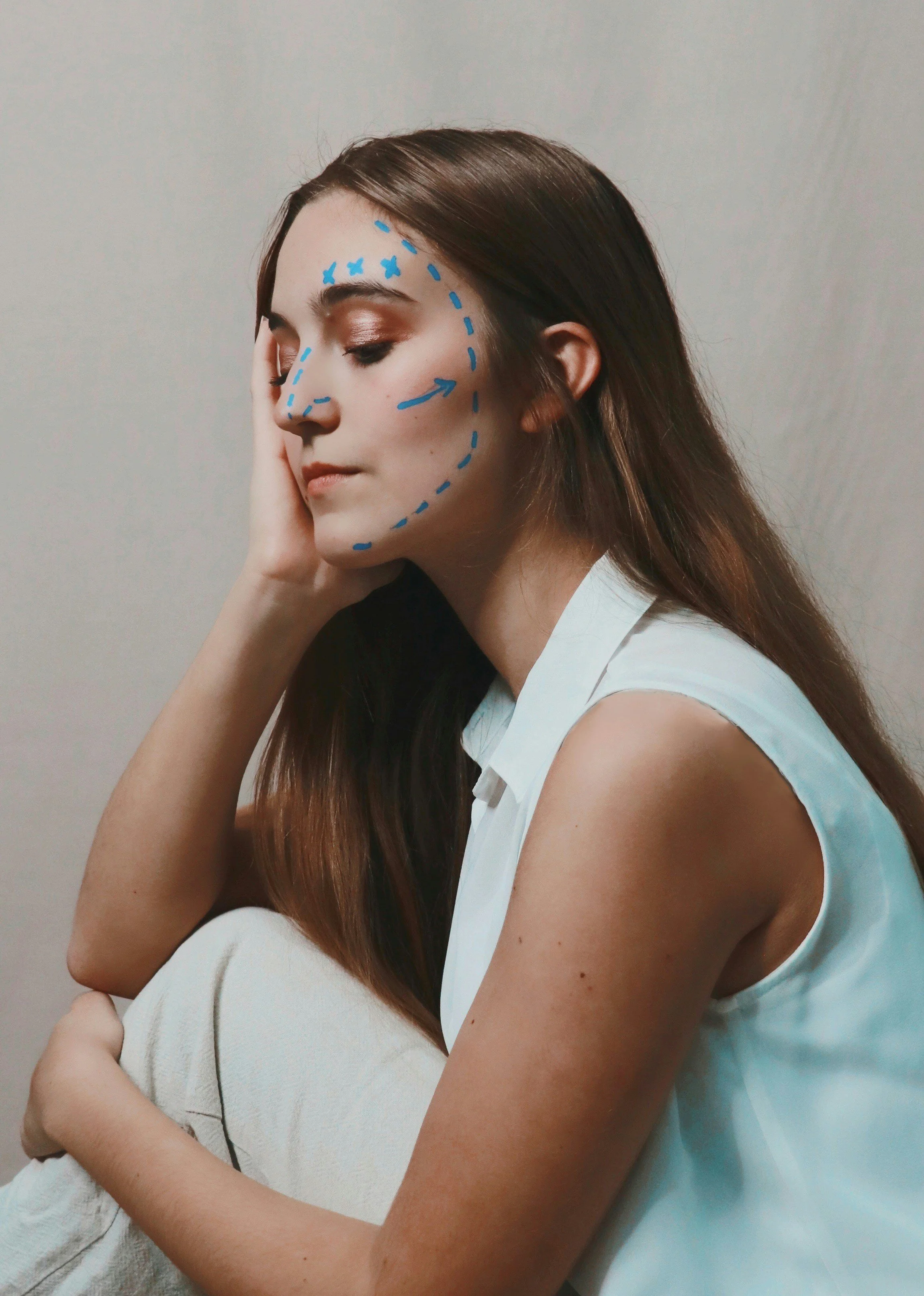
Photo: Joeyy Lee
When I landed in Armenia to participate in an eight-week volunteer program, I was entering another planet. I suddenly exclusively interacted with Armenians outside my immediate family, most of them women. My daily, in-person interactions were with my fellow diasporan volunteers, my extended family, or the broader local populace. This environment is where I learned that I was ugly.
I should note here: Obviously, no one directly looked into my eyes and said, “Sophia, you are ugly.” The tactics were much more subtle than elementary school taunts. Instead of calling me ugly directly, my new-found social circle of Armenian women would suggest I consider various cosmetic procedures—everything from chemically straightening my curly hair through keratin or other means; getting lip fillers; getting ‘preventative’ Botox injections; and even considering more invasive procedures like breast augmentation and rhinoplasty as a normal part of working on one’s appearance. All this made it difficult to actively ‘call out’ harmful messaging, because to notice that there even is a message being said, you need to be able to read between the lines.
When cosmetic procedures are suggested to women, it implies that they should change their physical appearance. But why should anyone alter their appearance to another form? Perhaps it's because the altered appearance is perceived as more attractive.
Does this mean the unaltered appearance is unattractive?
There’s little acknowledgement of this underlying messaging when cosmetic procedures are suggested to young women. I think it’s time to have a serious discussion about the way cosmetic procedures are pitched to Armenian women, and the underlying beliefs about Armenian ethnic features that are being propagated, especially as a thriving plastic surgery industry is emerging in Armenia.
Beliefs about beauty do not exist in a vacuum. Physical features are physical manifestations of gender expression and ethnic heritage. The decision to elevate certain physical features as ‘beautiful’ often says more about our biases about the identities represented by those features than our personal aesthetic preferences.
🏥💉👵➡👸 💉🏥
🏥💉👵➡👸 💉🏥
When observing a beauty culture from the outside, without personal emotions clouding our judgment, it’s easy to read the subtext, make the connections, and confront internalized racism. East Asian blepharoplasty, or double eyelid surgery, is a popular procedure that adds an eyelid crease to those born with monolids (a type of eyelid seen in people who don't have a double eyelid or crease), making their eyes look wider and larger. The procedure was first performed in Japan during a period of increasing Western influence. While researching this piece, I read about the prevalence of double eyelid surgery among the people of Buryatia, in the far east of the Russian Federation. Natalya Badmayeva, a Buryat who underwent double eyelid surgery, shared her reasons with the Siberia-based outlet People of Baikal: “In my youth, Buryats were [considered] village people. Narrow-eyed, swarthy, uneducated, Buryat-speaking—this was the image I was trying to escape. I specifically didn’t learn to speak Buryat and had my eyelids done twice.”
From Badmayeva’s comments, we can easily observe that the idea that double eyelids are more desirable than monolids does not exist in a vacuum–the aesthetic preference comes from internalized racism. The monolids themselves are not ugly; it is the fact that they are associated with an ethnic group otherized by mainstream Russian society that makes them undesirable. The decision to get double eyelid surgery does not come from some innate preference but is influenced by the background noise around what (and who) is beautiful, desirable, and acceptable.
Armenians have lived as an ethnic minority under various empires for centuries. Currently, as a largely diasporic people, most Armenians live as ethnic minorities, including those in our community here in Toronto. While conditions for Armenians living as ethnic minorities have largely improved since the days of the Ottoman Empire and Soviet Union, the beliefs and beauty standards our community has internalized from oppressors remain. Now, when confronting anti-Armenian beauty standards, we mostly push back against messaging from our community members, not external oppressors.
Which brings me back to my experiences confronting beauty culture in Armenia. You can’t escape advertisements for plastic surgery in Armenia: There are magazine articles about Botox, metro ads about filler, and if your Instagram algorithm figures out you’re in Armenia like mine did, you will be inundated with ads for local plastic surgeons. In my case, you also can’t escape the not-so-subtle suggestion to alter your appearance from friends and family. Probably the physical feature of mine that was targeted the most was my curly dark hair.
In Toronto, I was surrounded by odar (non-Armenian) classmates who complimented my hair often enough, especially when the ends of my hair were dyed a patchy ‘engineering purple.’ I had no insecurity about my hair texture or colour, so I was shocked when nearly every female companion in Armenia would insist that I needed to permanently straighten my hair and consider lightening the colour.
This was not an issue of one or two people having a personal preference; it was a broad cultural pattern of having one ‘look’ elevated as beautiful above another. Where does this cultural pattern come from? Who exactly would I be emulating if I changed my natural appearance? Why is this Eurocentric Slavic ‘look’ valued? These are important questions, but no one else was asking them.
It’s essential to question and reconsider the ‘need’ to alter the natural Armenian appearance because beauty culture does not exist without consequences. How we feel about one feature of our ethnicity impacts how we feel about others: We saw that Badmayeva’s shame around her monolids was also tied to shame around speaking her native tongue. As part of national pride, it’s important to elevate and preserve natural Armenian features so that Armenian children can grow up with healthy self-esteem (because just planning to eventually ‘fix’ their faces with plastic surgery is not a sustainable solution).
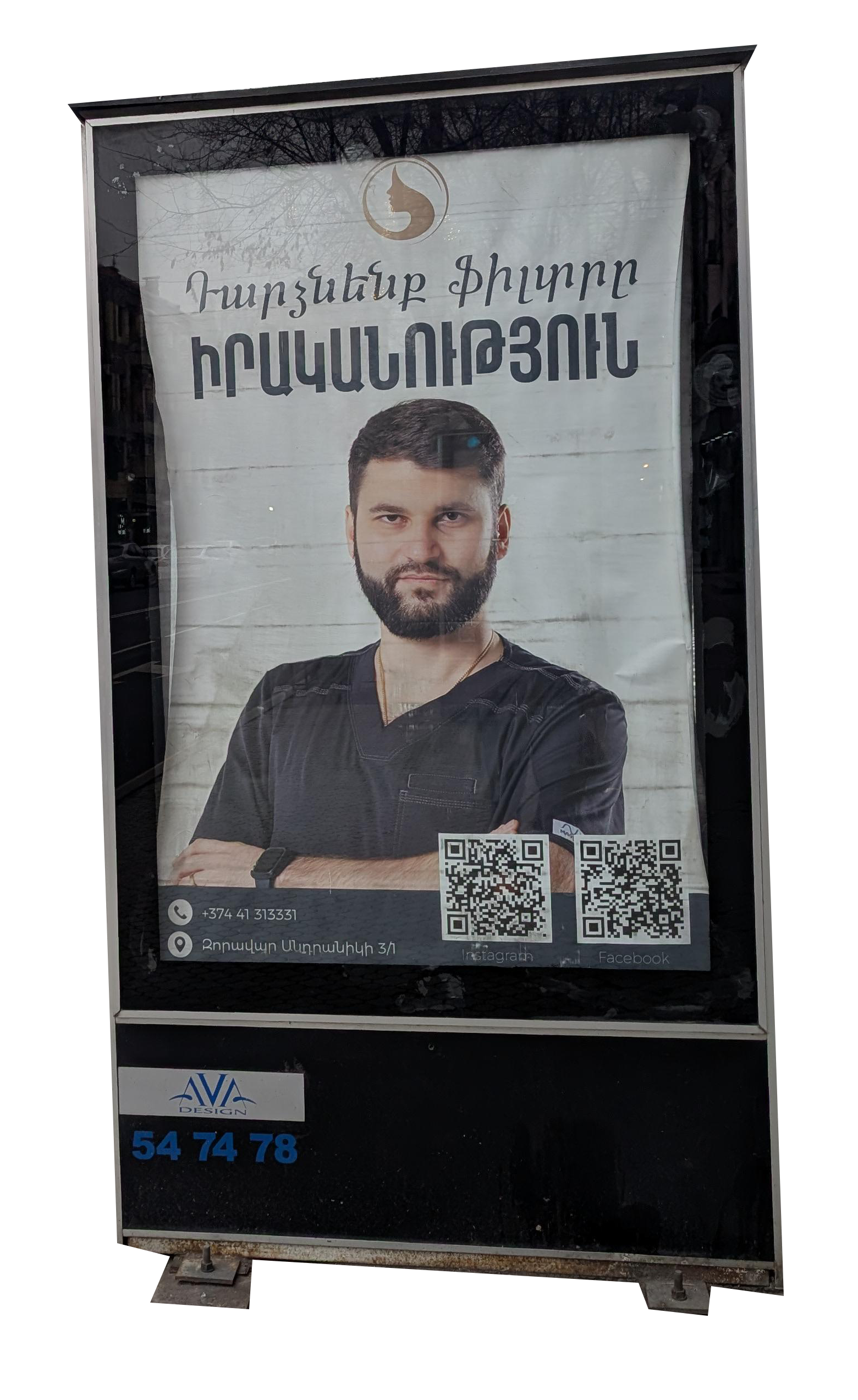
A billboard in Yerevan urging people to 'make the [social media] filter a reality.' (Photo: Rupen Janbazian)
It’s difficult to have frank discussions about the negative consequences of plastic surgery. The decision of plastic surgery is often treated as an individual risk-benefit analysis of weighing the health risks of a procedure (of which there can be many) vs. the reward of becoming one step closer to conventionally pretty. Therefore, in my experience, any attempt to critique the pervasiveness of plastic surgery is taken as a personal attack by those choosing to undergo it. Which I find strange since the mercenaries of beauty culture are the ones who are the most brutal in attacking individual people, creating a ‘problem’ out of ethnic features just to sell a ‘solution.’
The ‘solution’ to insecurity about one’s looks is not permanently altering them. Achieving beauty is fleeting; beauty trends come and go, our environment and society change over time. Only by improving our self-perception through a difficult unlearning process can we hope to build real confidence. The work cannot be done physically by a surgeon, but must be done mentally by the Armenian community as a whole.
I was lucky to learn the pointlessness of chasing after societally accepted ‘beauty’ at a young age. As an 11-year-old girl, I visited a museum dedicated to the Empress Elisabeth of Austria, or Sisi, as her fans know her. At her prime, Sisi was considered the most beautiful woman in Europe. I had known all the facts about Sisi going in: I knew that she was incredibly vain, moody, and obsessive about maintaining a waist measurement of 16 inches, to the point of disordered eating. Knowing the facts on paper was one thing, seeing it in person was another.
I remember feeling horrified when I saw a mannequin wearing Sisi’s coronation gown–a waist that was unnaturally small made her look so frail. The tour included viewings of the exercise equipment she used obsessively and the salon chair she reportedly sat in for hours each day so multiple hair stylists could style her floor-length hair. The tour allowed me to visualize how unglamorous Sisi’s daily life was since beauty rituals consumed all of her time.
Was Sisi happy as the most beautiful woman in Europe? I had known going in that she wasn’t, but the tour emphasized the extent of her misery. When the tour guide showed us the items she kept in her travel bag, they casually pointed out the many needles she carried with her. The needles were so that she could inject herself with cocaine syrup, the antidepressant prescribed for her deep depression. Seeing her needles packed next to a hairbrush and cosmetics made me sick to my stomach. I vowed I wouldn’t end up like her–accepted as beautiful by the world but deeply self-loathing.
Towards the end of her life, Sisi was so insecure that she spoke in a barely audible whisper to avoid showing her yellowed teeth, and wore veils in public to hide her middle-aged face. Her obsession with beauty culture literally silenced her and made her invisible. Do we want this fate for our Armenian girls?
I feel pain when looking at the bruised and bandaged face of yet another 18-year-old Armenian girl post-nose job. The constant stream of overfilled lips is disheartening; critics like myself are justified in feeling uneasy with this unnatural, over-replicated look. Something needs to be done to break this cycle of Armenian women wanting to butcher their natural faces. Until then, I return home to my odar environment in Toronto–an environment where, bizarrely, my Armenian face was never ugly. ֎
This article was published in Torontohye’s Oct. 2024 (#206) issue.
Join the conversation! How has beauty culture impacted you or those around you? We invite you to share your thoughts, experiences, and reflections on the pressures of cosmetic procedures and beauty standards within the Armenian community. Write to our editor at rupen@torontohye.ca, and your letter might be featured in an upcoming issue of Torontohye.